Do you ever feel your writing sounds repetitive when describing the weather? You might keep using the same words like sunny, rainy, or windy again and again. This is a common problem, especially if you’re trying to create vivid travel or nature descriptions. Using the right synonyms for weather words in English can transform your writing from basic to engaging.
In this guide, you’ll learn how to replace common weather words with more expressive and accurate alternatives. Whether you’re writing a travel blog, describing a landscape, or preparing for an academic essay, choosing the right synonym helps you paint a clearer picture for your reader.
As a travel writer with 13 years of experience, I’ve seen how small vocabulary changes can dramatically improve storytelling. By the end of this article, you’ll have a complete list of synonyms, understand when to use them, and avoid common mistakes that weaken your writing.
Quick Answer:
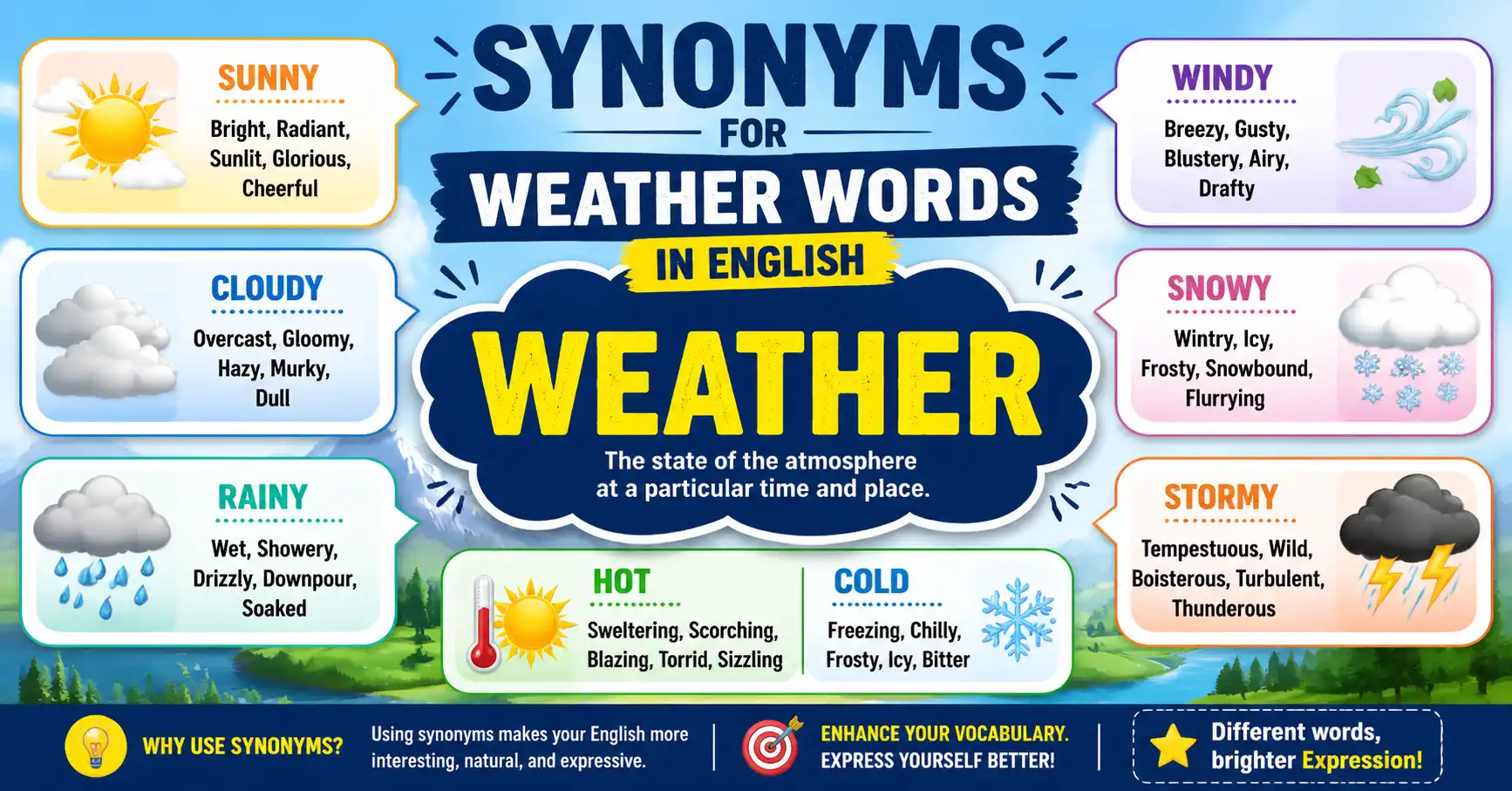
Synonyms for weather words in English include terms like sunny → bright, radiant, rainy → drizzly, pouring, and windy → breezy, gusty. These alternatives help you describe weather more precisely and vividly, especially in travel and nature writing. Choosing the right synonym depends on intensity, tone, and context.
What Does “Weather Words” Mean?
Weather words are vocabulary used to describe atmospheric conditions such as temperature, precipitation, wind, and sky appearance. These include common terms like:
- Sunny
- Rainy
- Cloudy
- Stormy
- Windy
In academic and descriptive writing, using varied synonyms for weather words in English improves clarity and avoids repetition. According to academic writing conventions, lexical variety is essential for higher IELTS band scores, particularly in Task 2 essays.
Complete Synonyms List
Here are 15 powerful synonyms for common weather words:
- Sunny → bright, radiant, glowing
- Rainy → drizzly, pouring, showery
- Windy → breezy, gusty, blustery
- Cloudy → overcast, gloomy, grey
- Stormy → turbulent, violent, tempestuous
- Hot → scorching, sweltering, blazing
- Cold → chilly, freezing, icy
- Foggy → misty, hazy, murky
Comparison Table
| Word | Simple Meaning | Best Used When | Avoid When |
| Bright | Full of sunlight | Clear summer days | Weak sunlight |
| Drizzly | Light rain | Calm, soft rain scenes | Heavy storms |
| Gusty | Strong bursts of wind | Coastal or open areas | Gentle breeze |
| Overcast | Fully cloudy | Dull skies | Partly cloudy |
| Tempestuous | Violent storm | Dramatic writing | Casual tone |
| Sweltering | Extremely hot | Desert or tropical heat | Mild warmth |
| Icy | Very cold | Winter scenes | Cool weather |
Formal vs Informal Synonyms
| Formal Synonyms | Informal Synonyms |
| Precipitation | Rain |
| Overcast | Cloudy |
| Tempestuous | Stormy |
| Moderate breeze | Windy |
| Frigid | Cold |
Key Insight:
Formal synonyms are used in academic or report writing. Informal ones fit casual blogs or travel storytelling.
Real Example Sentences
- The beach looked radiant under the morning sun.
- A drizzly afternoon made the streets quiet and reflective.
- The mountain peak was hidden in a misty veil.
- We walked through a gusty valley with strong winds pushing us forward.
- The sky turned overcast, signaling rain ahead.
- It was a sweltering day in the desert, with no shade in sight.
- The lake froze into an icy sheet overnight.
- A tempestuous storm shook the entire coastline.
Travel Writer’s Tip:
When describing destinations, always match the synonym to the mood.
For example, use misty for peaceful scenes, but murky for eerie settings.
When to Use vs When NOT to Use
When to Use
Use synonyms when you want to:
- Avoid repetition
- Add emotional tone
- Describe intensity accurately
- Improve IELTS lexical resource
When NOT to Use
Avoid synonyms when:
- The meaning changes too much (breezy ≠ windy always)
- Writing requires clarity over style (e.g., weather reports)
- The audience is beginner-level English learners
In our experience helping writers, overusing complex synonyms can reduce clarity instead of improving it.
Common Mistakes Writers Make
- Using synonyms incorrectly
Example: Using drizzle for heavy rain - Ignoring intensity differences
Breezy is mild, while gusty is strong - Overcomplicating simple descriptions
Not every sentence needs advanced vocabulary - Mixing formal and informal tones
Avoid combining tempestuous with casual language
Tips and Best Practices
- Learn synonyms in context, not isolation
- Group words by intensity levels
- Practice with real sentences
- Read travel blogs for natural usage
- Focus on clarity first, variety second
Nature Writing Example:
Instead of:
“The weather was bad.”
Write:
“The sky turned gloomy, and a gusty wind swept across the valley.”
Frequently Asked Questions
Q1: What are the best synonyms for “sunny”?
A: The best synonyms include bright, radiant, and glowing. Use bright for neutral descriptions, radiant for vivid imagery, and glowing for warm, emotional tone in travel or nature writing.
Q2: How can I improve weather descriptions in writing?
A: Use varied vocabulary, focus on sensory details, and match the word to intensity. For example, replace rainy with drizzly or pouring depending on strength. This improves clarity and reader engagement.
Q3: Are weather synonyms important for IELTS writing?
A: Yes. IELTS examiners assess lexical variety. Using precise synonyms like overcast instead of cloudy can help achieve a higher band score, especially in Task 2 essays.
Q4: What is the difference between “breezy” and “gusty”?
A: Breezy refers to a light, pleasant wind, while gusty describes strong, sudden bursts. Choosing correctly depends on intensity and the mood you want to create in your writing.
Q5: Can I use advanced synonyms in all types of writing?
A: No. Use advanced words in descriptive or academic writing. Avoid them in technical or beginner-level contexts where clarity is more important than style.
Q6: How do I remember weather synonyms easily?
A: Group them by categories like temperature, wind, and rain. Practice with real sentences and read travel content regularly. Repetition in context helps long-term memory.
Conclusion
Using the right synonyms for weather words in English can elevate your writing from simple to vivid. You’ve learned how to choose accurate alternatives, understand their nuances, and apply them in real contexts. Remember, the goal is not just variety—but clarity and impact.
You might also want to read our guide on synonyms for landscape words to further enhance your descriptive skills.
Keep practicing, observe real-world weather descriptions, and refine your vocabulary step by step. Your writing will naturally become more engaging and expressive.

Andrew Powell is a travel writer and nature journalist who has spent over a decade writing about places, landscapes, and the natural world — and thinking carefully about the words that do those subjects justice ( Biography ).