Are you struggling to find the right words to convey the beauty, culture, and experiences of your travel stories? A strong vocabulary is essential to painting vivid pictures for your readers, allowing them to immerse themselves in the places you describe. In this article, we’ll walk you through a curated travel writing vocabulary words list for 2026.
You’ll discover new ways to describe landscapes, people, and experiences in a way that transports readers to the very locations you visit. Whether you’re an aspiring travel writer or seasoned professional, you’ll find valuable tips and vocabulary that can make your writing more engaging and evocative.
Quick Answer:
Travel writing vocabulary words are words that help you describe locations, emotions, experiences, and scenery in a vivid and sensory-rich manner. These words elevate your storytelling, creating an immersive experience for readers.
What does Travel Writing Vocabulary Mean?
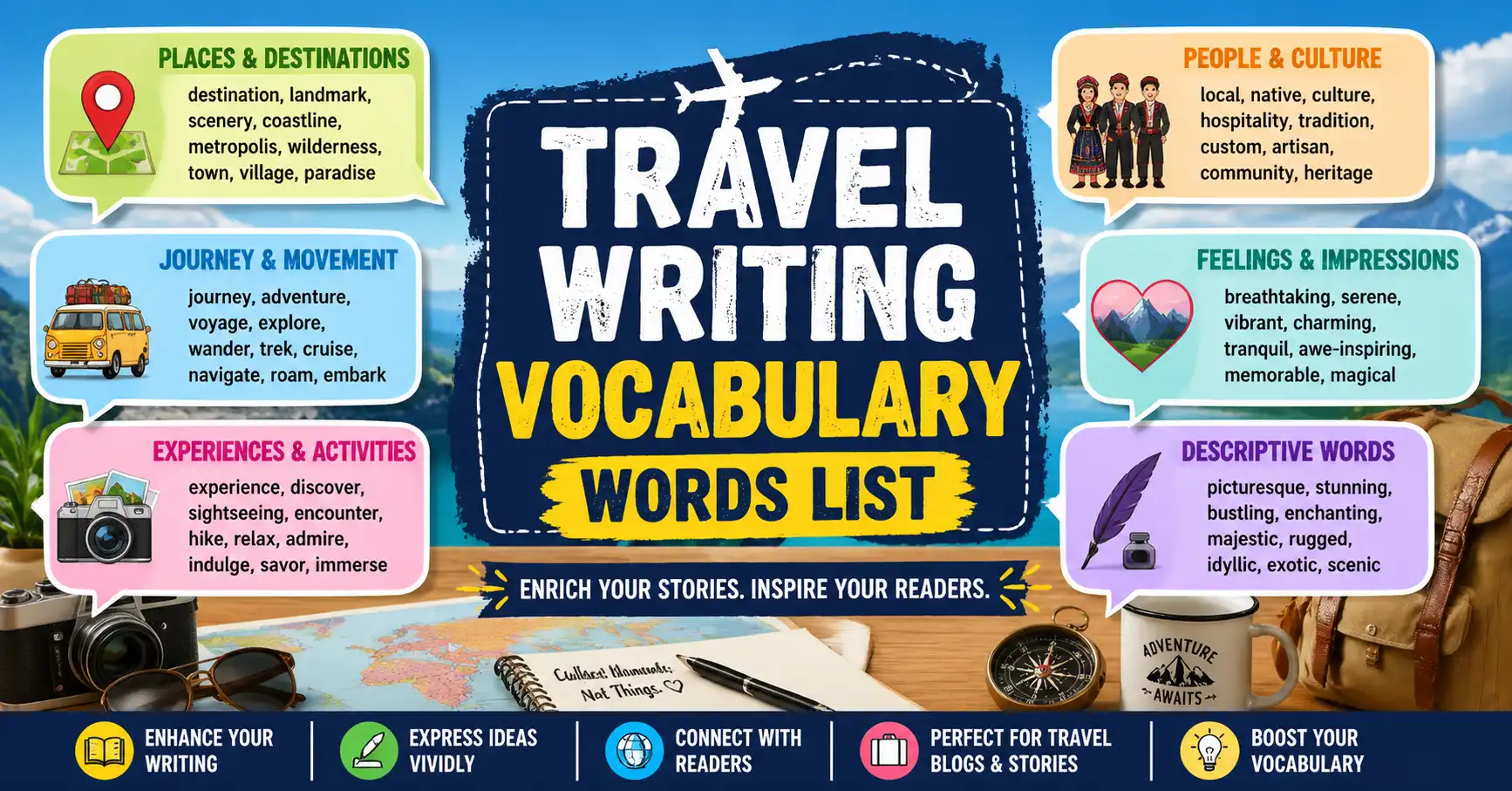
Travel writing vocabulary encompasses the words and phrases used to describe places, people, culture, and experiences in travel writing. These words are specifically chosen to evoke emotions, paint vivid pictures, and engage the reader’s senses. Travel writers use rich, descriptive language to take readers on a journey, making them feel as though they are right there in the location being described.
Complete Synonyms List
Here are some powerful travel writing vocabulary words to enhance your descriptive skills:
- Majestic – Grand, magnificent
- Serene – Calm, peaceful
- Bustling – Lively, full of activity
- Breathtaking – Stunning, awe-inspiring
- Vibrant – Full of life, colorful
- Remote – Isolated, distant
- Picturesque – Charming, visually attractive
- Dazzling – Sparkling, radiant
- Secluded – Hidden, private
- Ethereal – Otherworldly, delicate
Comparison Table: Word | Simple Meaning | Best Used When | Avoid When
| Word | Simple Meaning | Best Used When | Avoid When |
| Majestic | Grand, magnificent | Describing landscapes or structures | Casual settings or informal writing |
| Serene | Calm, peaceful | Describing peaceful places or moments | Active or energetic scenes |
| Bustling | Full of activity | Describing cities or crowded areas | Quiet or rural places |
| Picturesque | Visually attractive | Depicting scenic views or architecture | Describing abstract concepts |
| Dazzling | Sparkling, radiant | When describing something that shines or impresses | Describing ordinary or mundane subjects |
Formal vs Informal Synonyms
| Word | Formal Synonyms | Informal Synonyms |
| Majestic | Grand, Imposing | Awesome, Huge |
| Serene | Tranquil, Calm | Chill, Peaceful |
| Bustling | Vibrant, Lively | Hectic, Busy |
| Picturesque | Scenic, Attractive | Beautiful, Lovely |
| Dazzling | Radiant, Stunning | Cool, Blinding |
Real Example Sentences
Here are 8 example sentences to help you visualize how these words can elevate your travel writing:
- The majestic mountains towered above us, their snow-capped peaks gleaming in the sunlight.
- As I wandered through the serene village, the only sounds were the chirping of birds and the rustling of leaves.
- The bustling streets of Tokyo were filled with people, each one rushing to their next destination.
- The view from the cliff was breathtaking, with the ocean stretching out to the horizon.
- The vibrant colors of the market stalls made the scene feel alive with energy and excitement.
- We ventured to a remote village, far away from the tourist crowds, where the pace of life was slow and unhurried.
- The picturesque coastline of Amalfi was dotted with charming houses perched on the cliffs.
- The dazzling lights of the city skyline sparkled as we walked along the riverbank at night.
When to Use vs When NOT to Use
- Majestic: Use when describing grand structures, natural wonders, or awe-inspiring places. Avoid using it for casual, everyday situations.
- Serene: Perfect for tranquil settings like peaceful beaches or remote villages. Don’t use for chaotic or lively scenes.
- Bustling: Best for describing busy cities or crowded areas. Avoid it when discussing quiet places or natural scenes.
- Picturesque: Great for scenic views or visually appealing locations. Avoid for abstract concepts or non-visual subjects.
- Dazzling: Ideal for describing things that catch the eye, like city lights or stunning landscapes. Avoid using it for dull or plain descriptions.
Common Mistakes Writers Make
- Overuse of adjectives: While adjectives are essential, overloading sentences with them can make writing feel cluttered. Use them sparingly for maximum impact.
- Using the wrong tone: Some words, like “breathtaking,” are better suited to formal or descriptive writing. Be mindful of the tone of your piece and match your vocabulary accordingly.
- Inaccurate comparisons: Be cautious when comparing destinations or experiences. The word “serene” may not be appropriate for a lively city, and “bustling” may not capture the essence of a tranquil rural village.
Tips and Best Practices
- Show, don’t tell: Instead of saying “The city was beautiful,” describe it with words like “vibrant” or “picturesque” to give readers a vivid mental image.
- Use sensory language: Focus on sensory details like sight, sound, smell, and touch. Words like “breathtaking,” “serene,” and “dazzling” help engage the senses.
- Vary your vocabulary: Avoid repetition by using synonyms or related terms. This will make your writing more dynamic and keep the reader engaged.
Frequently Asked Questions
Q: What is the importance of travel writing vocabulary?
A: Travel writing vocabulary is crucial as it helps to create vivid, sensory-rich descriptions, bringing places and experiences to life for readers.
Q: How can I improve my travel writing vocabulary?
A: Read more travel blogs, books, and articles, and practice using new words in your writing. Incorporate sensory language and varied descriptions.
Q: What is the best way to describe a place in travel writing?
A: Focus on sensory details like color, sound, texture, and scent. Use evocative words such as “majestic,” “breathtaking,” and “vibrant” to immerse readers in the experience.
Q: How can I avoid overusing adjectives in travel writing?
A: Use adjectives strategically, focusing on the most impactful ones that capture the essence of a place. Mix in descriptive verbs and nouns for variety.
Q: Should I use formal or informal language in travel writing?
A: It depends on your audience. Formal language suits professional or academic contexts, while informal language is perfect for casual travel blogs or personal narratives.
Q: Can I use travel writing vocabulary in other types of writing?
A: Absolutely! Many of the words you use in travel writing can enhance any descriptive writing, such as storytelling, nature writing, or even marketing.
Conclusion
In summary, enriching your travel writing vocabulary with descriptive words like “majestic,” “serene,” and “dazzling” can transform your stories into immersive experiences. By using vivid language, you’ll help readers connect emotionally with the places you describe.
You might also want to read our guide on sensory language for travel writing. Keep honing your vocabulary, and happy writing!

Andrew Powell is a travel writer and nature journalist who has spent over a decade writing about places, landscapes, and the natural world — and thinking carefully about the words that do those subjects justice ( Biography ).