Do your nature descriptions feel flat or repetitive? You’re not alone. Many writers struggle to find the right words to capture the beauty of landscapes, forests, oceans, and skies. Without strong vocabulary, even the most stunning scenery can sound ordinary.
That’s where the right descriptive words for nature writing make all the difference. When you choose precise, sensory-rich language, your writing comes alive. Readers don’t just read—they see, hear, and feel the environment you describe.
In this guide, you’ll learn how to expand your vocabulary with powerful synonyms, understand when to use them, and avoid common mistakes. Whether you’re writing travel blogs, essays, or creative pieces, this article will help you sound more vivid, natural, and engaging.
Quick Answer:
Descriptive words for nature writing are vivid, sensory-rich adjectives and verbs that help you paint clear images of landscapes, weather, and natural elements. Examples include lush, serene, rugged, windswept, tranquil, and verdant. These words enhance imagery, evoke emotion, and make your writing more immersive for readers.
What Does “Descriptive Words for Nature Writing” Mean?
Descriptive words for nature writing are vocabulary choices that help you create vivid mental images of natural environments. These include:
- Adjectives (e.g., misty, golden, dense)
- Verbs (e.g., rustling, glimmering)
- Sensory phrases (e.g., the scent of damp earth)
In nature and travel writing, your goal is not just to describe—but to immerse the reader in the scene.
According to academic and creative writing standards, strong descriptive language improves clarity, engagement, and emotional impact—key criteria in high-level writing assessments and professional travel journalism.
Complete Synonyms List
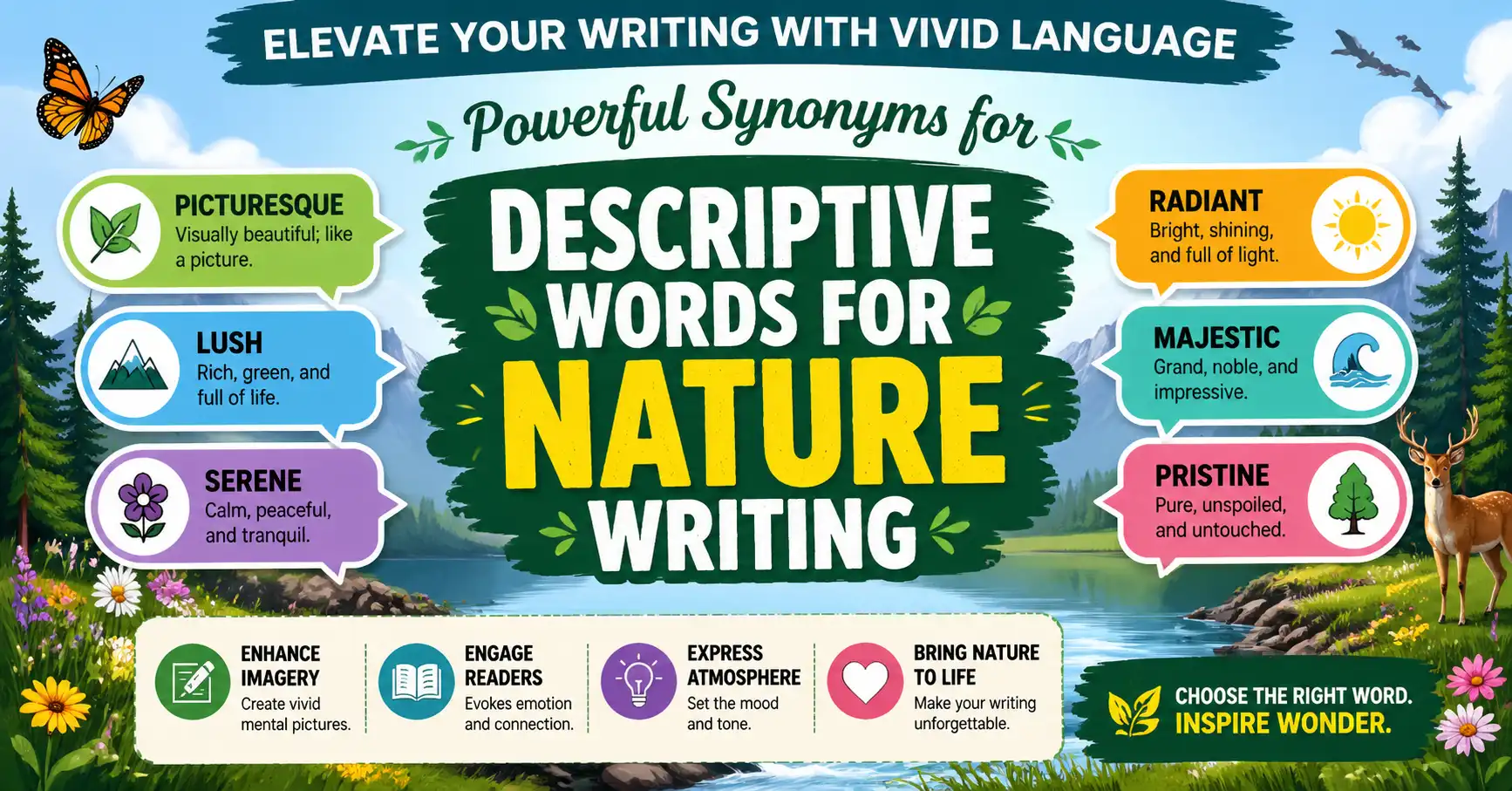
Here are powerful descriptive words you can use in nature writing:
- Lush
- Serene
- Rugged
- Verdant
- Tranquil
- Windswept
- Majestic
- Barren
- Pristine
- Misty
- Radiant
- Dense
- Untamed
- Picturesque
- Glistening
Nature Writing Example:
You walk through a lush forest, where glistening leaves reflect the morning sun and the air feels cool and serene.
Comparison Table
| Word | Simple Meaning | Best Used When | Avoid When |
| Lush | Rich and green | Describing forests, gardens | Dry or desert landscapes |
| Rugged | Rough and uneven | Mountains, cliffs | Calm or soft scenery |
| Serene | Peaceful and calm | Lakes, quiet places | Busy or chaotic environments |
| Verdant | Green and fresh | Formal writing, essays | Casual blog writing |
| Barren | Empty, lifeless | Deserts, harsh environments | Fertile or green areas |
| Majestic | Grand and impressive | Mountains, waterfalls | Small or ordinary scenes |
| Misty | Covered in mist | Early mornings, hills | Clear, bright conditions |
| Pristine | Pure and untouched | Natural reserves | Polluted or urban settings |
Formal vs Informal Synonyms
| Formal Word | Informal Alternative | Usage Context |
| Verdant | Green | Academic, essays |
| Serene | Calm | General writing |
| Majestic | Amazing | Travel blogs vs casual speech |
| Barren | Empty | Reports vs storytelling |
| Pristine | Clean | Professional vs everyday writing |
Why this matters:
According to academic writing conventions, formal vocabulary like verdant and pristine adds sophistication, while informal words suit blogs or casual storytelling.
Real Example Sentences
Here are practical examples you can use or adapt:
- The valley stretched wide and verdant, filled with vibrant greenery.
- A serene lake reflected the soft hues of the sunset.
- The coastline was rugged, shaped by years of crashing waves.
- Morning fog created a misty atmosphere over the hills.
- The forest felt lush and alive, echoing with bird calls.
- The desert appeared barren, with no sign of life for miles.
- Snow covered the mountains, giving them a majestic presence.
- The beach remained pristine, untouched by human activity.
Travel Writer’s Tip:
In our experience helping writers, combining two descriptive words (e.g., quiet and windswept shore) creates stronger imagery than using one alone.
When to Use vs When NOT to Use
When to Use:
Use descriptive words when you want to:
- Create vivid imagery
- Engage reader emotions
- Add depth to travel or nature writing
- Replace vague words like “nice” or “beautiful”
When NOT to Use:
Avoid overusing descriptive words when:
- Writing technical or scientific reports
- Clarity matters more than imagery
- You risk sounding repetitive or exaggerated
- Too many adjectives clutter your sentence
Example mistake:
❌ The very beautiful, extremely lush, amazingly green forest…
✔ The lush forest stretched endlessly.
Common Mistakes Writers Make
Many writers misuse descriptive words. Here’s what to avoid:
1. Overloading Sentences
Too many adjectives weaken impact. Keep it balanced.
2. Using the Same Words Repeatedly
Words like beautiful and nice reduce quality. Use variety.
3. Ignoring Context
“Serene storm” doesn’t make sense. Match words to the scene.
4. Misusing Formal Vocabulary
Words like verdant sound unnatural in casual blogs.
5. Lack of Sensory Detail
Strong writing includes sight, sound, smell, and texture.
Nature Writing Example:
Instead of:
❌ The forest was nice.
Write:
✔ The forest was dense and shadowy, filled with the scent of damp earth.
Tips and Best Practices
Here’s how you can improve quickly:
1. Focus on the Five Senses
Describe what you see, hear, smell, feel, and even taste.
2. Use Specific Words
Replace general terms with precise ones:
- “Tree” → “towering pine”
- “Water” → “crystal-clear stream”
3. Balance Description and Action
Too much description slows your writing. Keep flow natural.
4. Read Travel Writing
Writers we work with often improve faster by reading high-quality travel blogs and nature journalism.
5. Keep a Vocabulary List
Build your own list of descriptive words for regular use.
Frequently Asked Questions
Q1: What are the best descriptive words for nature writing?
A: The best words include lush, serene, rugged, pristine, verdant, and majestic. These words create vivid imagery and emotional impact. Choose based on the environment you describe, not randomly, to ensure your writing feels natural and accurate.
Q2: How can I improve my nature descriptions quickly?
A: Focus on sensory details and replace vague words with specific ones. Practice rewriting simple sentences using richer vocabulary. Reading travel writing also helps you understand how professionals describe landscapes effectively.
Q3: Are descriptive words important in travel writing?
A: Yes, they are essential. In travel writing, descriptive words help readers visualize places they haven’t visited. Strong vocabulary improves engagement and makes your writing more immersive and memorable.
Q4: Can I use formal words like “verdant” in blogs?
A: You can, but use them carefully. Formal words work best in essays or polished articles. In casual blogs, simpler alternatives like “green” may sound more natural and relatable to readers.
Q5: How many descriptive words should I use in one sentence?
A: Limit yourself to one or two strong descriptive words per sentence. Too many adjectives reduce clarity and make your writing feel heavy. Focus on precision rather than quantity for better impact.
Q6: What mistakes should beginners avoid in nature writing?
A: Avoid repetition, over-description, and vague language. Many beginners rely on generic words like “beautiful.” Instead, use specific and sensory-rich vocabulary to make your writing more vivid and engaging.
CONCLUSION
Using the right descriptive words for nature writing transforms your work from ordinary to memorable. You’ve learned how to choose precise vocabulary, understand context, and avoid common mistakes. Strong descriptions help readers experience the scene, not just read about it.
Keep practicing, build your vocabulary, and focus on sensory detail. Over time, your writing will naturally become more vivid and engaging.
You might also want to read our guide on powerful adjectives for scenery descriptions to continue improving your writing skills. Keep writing—and let nature speak through your words.

Andrew Powell is a travel writer and nature journalist who has spent over a decade writing about places, landscapes, and the natural world — and thinking carefully about the words that do those subjects justice ( Biography ).