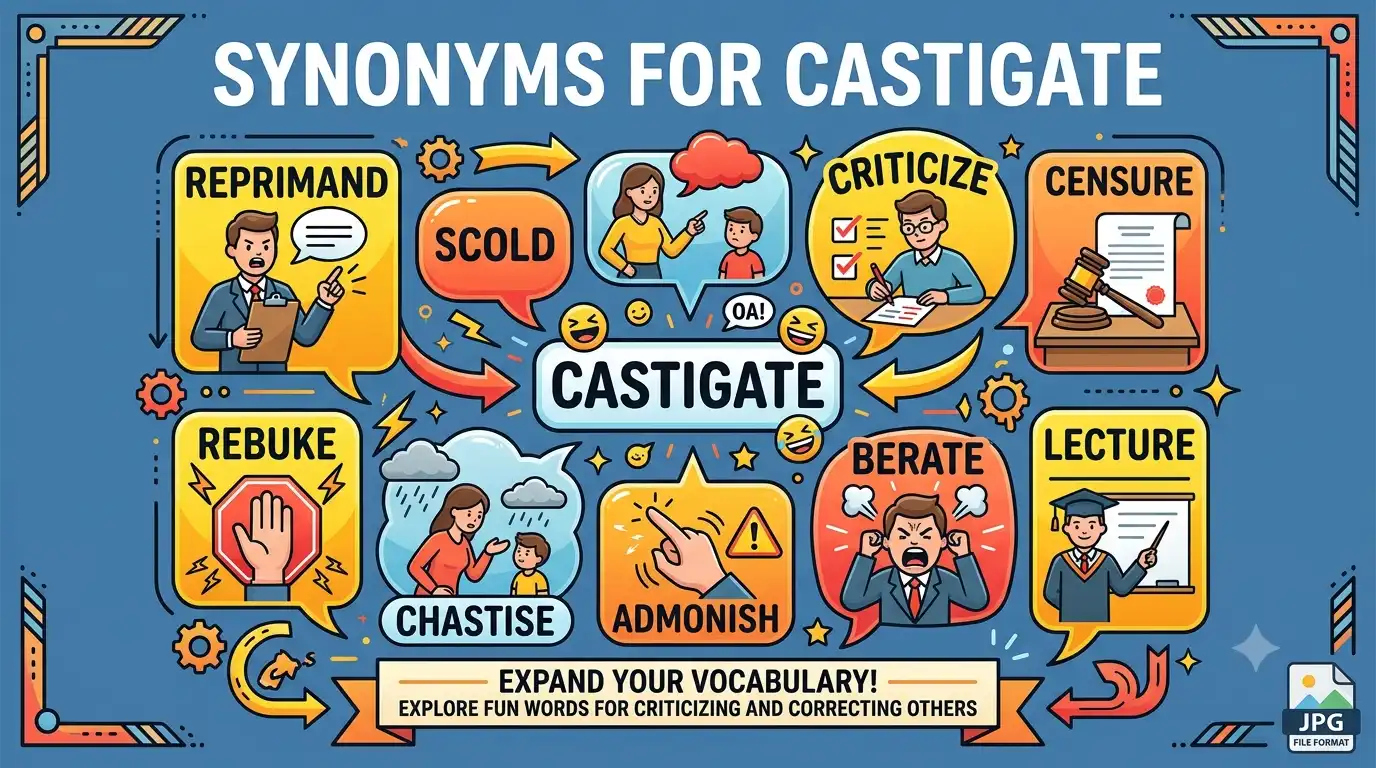
Finding the right synonyms for castigate can instantly elevate your writing, precise word choices, and emotional tone. When you search for synonyms for castigate, you are looking for expressive words that convey sharp criticism, formal reprimands, or intense disapproval. Understanding these synonyms for castigate gives students, writers, and communicators the exact language needed to describe harsh feedback without repeating the same basic words.
Imagine a high-stakes board meeting where a manager severely scolds an employee for a costly mistake, or a passionate movie critic tearing apart a terrible film in a review. In these moments, standard words like “scold” or “criticize” feel too weak to capture the intensity of the situation. You need stronger, more vivid vocabulary to convey that sharp correction effectively.
In simple terms, to castigate means to criticize, scold, or punish someone very harshly.
“Words hold the power to correct errors, shape character, and refine truth when spoken with precise intention.”
Learning these terms helps students write compelling academic essays with nuanced language. Bloggers and content writers can keep their readers engaged with varied vocabulary and higher SEO relevance. Daily English users will feel more confident expressing strong opinions and workplace feedback clearly.
“A flexible vocabulary transforms sharp criticism into constructive clarity.”
Linguistic Profile of “Castigate”
- Connotative Meaning: Highly intense, negative, authoritative, and formal. Implies stern judgment, severe discipline, or harsh verbal punishment.
- Etymology: Derived from the Latin word castigare, which combines castus (pure) and agere (to drive/make). Historically, it meant to purify or make clean through correction or punishment.
- Pronunciation (IPA): * US: /ˈkæs.tə.ɡeɪt/
- UK: /ˈkæs.tɪ.ɡeɪt/
- Syllables: 3 (cas-ti-gate)
- Affixation Pattern: Root (cast-) + Suffix (-igate, forming a causative verb meaning “to cause to be pure”).
Comparison Table of Key Synonyms
| Keyword / Synonym | Meaning | Usage Type | Context |
| Castigate | To criticize or reprimand someone very harshly. | Formal / Intense | Workplace, legal, academic |
| Reprimand | To give an official or formal rebuke. | Formal / Professional | Corporate, military, school |
| Berate | To scold or anger someone at length. | Emotional / Harsh | Personal, family, workplace |
| Chastise | To discipline or scold severely. | Semi-Formal / Stern | Parenting, leadership |
| Admonish | To warn or scold gently but firmly. | Moderate / Constructive | Teaching, advice, mentoring |
| Censue | To express strong formal disapproval. | Highly Formal / Legal | Politics, journalism, ethics |
| Lambaste | To criticize violently or attack verbally. | Casual / Expressive | News reviews, sports, entertainment |
50 Powerful Synonyms for Castigate
1. Reprimand
- Pronunciation: US: /ˌrep.rəˈmænd/ | UK: /ˈrep.rɪ.mɑːnd/
- Meaning: To tell someone officially that they did something wrong.
- Examples:
- The boss had to reprimand John for arriving late again.
- She received a written reprimand from her school principal.
2. Chastise
- Pronunciation: US: /chæˈstaɪz/ | UK: /tʃæˈstaɪz/
- Meaning: To scold or discipline someone sharply for poor behavior.
- Examples:
- The coach chastised the team for lack of effort during practice.
- Parents often chastise children to teach them right from wrong.
3. Berate
- Pronunciation: US: /bɪˈreɪt/ | UK: /bɪˈreɪt/
- Meaning: To yell at or scold someone angrily for a long time.
- Examples:
- Please do not berate the waiter over a small mistake.
- He berated himself for losing his house keys.
4. Rebuking (Rebuke)
- Pronunciation: US: /rɪˈbjuːk/ | UK: /rɪˈbjuːk/
- Meaning: To express sharp disapproval of someone’s actions.
- Examples:
- The teacher gave a stern rebuke to the noisy classroom.
- She felt hurt after her friend rebuked her comments.
5. Censure
- Pronunciation: US: /ˈsen.ʃɚ/ | UK: /ˈsen.ʃə/
- Meaning: To express strong formal judgment or official criticism against someone.
- Examples:
- Parliament voted to censure the corrupt politician.
- The board issued a public censure against the director.
6. Lambaste
- Pronunciation: US: /læmˈbeɪst/ | UK: /læmˈbæst/
- Meaning: To attack or criticize someone harshly in public or in writing.
- Examples:
- Critics lambasted the new movie for its poor storyline.
- The media lambasted the mayor after the failed city project.
7. Scold
- Pronunciation: US: /skoʊld/ | UK: /skəʊld/
- Meaning: To angrily tell someone, especially a child, that they behaved badly.
- Examples:
- The mother scolded her boy for playing near the busy street.
- I had to scold my dog for chewing my favourite shoes.
8. Admonish
- Pronunciation: US: /ædˈmɑː.nɪʃ/ | UK: /ədˈmɒn.ɪʃ/
- Meaning: To warn or advise someone firmly about their bad behavior.
- Examples:
- My doctor admonished me to eat less sugar every day.
- The officer admonished the driver for speeding down the hill.
9. Upbraid
- Pronunciation: US: /ʌpˈbreɪd/ | UK: /ʌpˈbreɪd/
- Meaning: To reproach or severely scold someone for a mistake.
- Examples:
- She upbraided her assistant for forgetting the vital files.
- He was upbraided by his peers for breaking his word.
10. Excoriate
- Pronunciation: US: /ɪkˈskɔːr.i.eɪt/ | UK: /ɪkˈskɔː.ri.eɪt/
- Meaning: To denounce or criticize someone in the harshest way possible.
- Examples:
- The reviewer excoriated the author’s latest romance novel.
- Voters excoriated the leaders for raising taxes suddenly.
11. Pillory
- Pronunciation: US: /ˈpɪl.ɚ.i/ | UK: /ˈpɪl.ər.i/
- Meaning: To attack or ridicule someone publicly.
- Examples:
- The press pilloried the actor after his rude interview.
- Online users pilloried the company for its poor customer service.
12. Revile
- Pronunciation: US: /rɪˈvaɪl/ | UK: /rɪˈvaɪl/
- Meaning: To speak to someone with abusive, angry, and hateful language.
- Examples:
- The dishonest referee was reviled by angry sports fans.
- She was reviled by her enemies for speaking the truth.
13. Vilify
- Pronunciation: US: /ˈvɪl.ə.faɪ/ | UK: /ˈvɪl.ɪ.faɪ/
- Meaning: To say or write very bad things about someone to ruin their image.
- Examples:
- Propaganda aims to vilify opposing political leaders.
- Do not vilify people just because they disagree with you.
14. Denounce
- Pronunciation: US: /dɪˈnaʊns/ | UK: /dɪˈnaʊns/
- Meaning: To publicly state that someone or something is evil or wrong.
- Examples:
- Human rights groups denounced the unfair new laws.
- She stood up to denounce violence in her neighborhood.
15. Disparage
- Pronunciation: US: /dɪˈspær.ɪdʒ/ | UK: /dɪˈspær.ɪdʒ/
- Meaning: To suggest that someone or something is worthless or unimportant.
- Examples:
- Never disparage the honest hard work of others.
- He disparaged her art skills in front of the whole class.
16. Slander
- Pronunciation: US: /ˈslæn.dɚ/ | UK: /ˈslɑːn.də/
- Meaning: To make false spoken statements that damage someone’s reputation.
- Examples:
- He sued his rival for trying to slander his reputation.
- Spreading fake rumors is a bad way to slander coworkers.
17. Defame
- Pronunciation: US: /dɪˈfeɪm/ | UK: /dɪˈfeɪm/
- Meaning: To harm the good reputation of a person or business.
- Examples:
- The article was written to defame the successful store owner.
- Companies often fight back when people try to defame them.
18. Malign
- Pronunciation: US: /məˈlaɪn/ | UK: /məˈlaɪn/
- Meaning: To speak evil or untrue statements about someone behind their back.
- Examples:
- Her former friend tried to malign her character at work.
- It is wrong to malign people without knowing their full story.
19. Reproach
- Pronunciation: US: /rɪˈproʊtʃ/ | UK: /rɪˈprəʊtʃ/
- Meaning: To express disappointment or blame toward someone.
- Examples:
- Her mother looked at her with quiet reproach.
- He reproached himself for letting his family down.
20. Reprove
- Pronunciation: US: /rɪˈpruːv/ | UK: /rɪˈpruːv/
- Meaning: To gently correct or express blame to someone.
- Examples:
- The teacher reproved the boy for whispering in class.
- She reproved her husband for forgetting his jacket.
21. Lecture
- Pronunciation: US: /ˈlek.tʃɚ/ | UK: /ˈlek.tʃə/
- Meaning: To talk to someone in an annoying, serious way about their mistakes.
- Examples:
- My dad began to lecture me on spending money unwisely.
- Nobody likes to be lectured about their diet habits.
22. Call out
- Pronunciation: US: /kɑːl aʊt/ | UK: /kɔːl aʊt/
- Meaning: To draw public attention to someone’s wrong behavior.
- Examples:
- She called out her classmate for copying her homework.
- It takes courage to call out unfair workplace rules.
23. Dress down
- Pronunciation: US: /dres daʊn/ | UK: /dres daʊn/
- Meaning: To scold or criticize someone very angrily in private or public.
- Examples:
- The manager gave the team a complete dress down after the audit.
- He was dressed down by his supervisor for missing the deadline.
24. Take to task
- Pronunciation: US: /teɪk tuː tæsk/ | UK: /teɪk tə tɑːsk/
- Meaning: To strongly criticize someone for something bad they did.
- Examples:
- The committee took the director to task for lost funds.
- Teachers will take students to task if they skip classes.
25. Chew out
- Pronunciation: US: /tʃuː aʊt/ | UK: /tʃuː aʊt/
- Meaning: To yell at someone very loudly and angrily.
- Examples:
- The sergeant chewed out the soldier for dirty boots.
- My boss chewed me out for failing to reply to the email.
26. Rail against
- Pronunciation: US: /reɪl əˈɡenst/ | UK: /reɪl əˈɡenst/
- Meaning: To complain violently and loudly about something or someone.
- Examples:
- Workers gathered to rail against the unfair pay cuts.
- He often rails against modern technology and social media.
27. Fulminate
- Pronunciation: US: /ˈfʊl.mə.neɪt/ | UK: /ˈfʊl.mɪ.neɪt/
- Meaning: To express strong protest or anger against a decision or person.
- Examples:
- Activists continue to fulminate against corporate pollution.
- The column fulminated against the new city tax rules.
28. Pan
- Pronunciation: US: /pæn/ | UK: /pæn/
- Meaning: To give a very harsh, negative review of a creative effort.
- Examples:
- Theater critics completely panned the new Broadway show.
- The restaurant was panned online for terrible service.
29. Tear into
- Pronunciation: US: /ter ˈɪn.tuː/ | UK: /teə ˈɪn.tuː/
- Meaning: To attack someone verbally with extreme anger.
- Examples:
- The lawyer tore into the witness during cross-examination.
- My sister tore into me when I accidentally broke her phone.
30. Lash out at
- Pronunciation: US: /læʃ aʊt æt/ | UK: /læʃ aʊt æt/
- Meaning: To suddenly attack someone with angry words.
- Examples:
- Stressed employees sometimes lash out at innocent friends.
- He lashed out at his critics during the interview.
“Clear language allows us to critique actions constructively without destroying individual worth.”
31. Slag off
- Pronunciation: US: /slæɡ ɑːf/ | UK: /slæɡ ɒf/
- Meaning: To speak insultingly or critically about someone behind their back.
- Examples:
- It is rude to slag off your coworkers during lunch.
- Stop slagging off people who are trying their best.
32. Blast
- Pronunciation: US: /blæst/ | UK: /blɑːst/
- Meaning: To criticize someone fiercely in public media or conversation.
- Examples:
- Headlines blasted the mayor for his sudden decision.
- The coach blasted the team after their terrible defeat.
33. Slap on the wrist
- Pronunciation: US: /slæp ɑːn ðə rɪst/ | UK: /slæp ɒn ðə rɪst/
- Meaning: To give someone a very light punishment or minor scolding.
- Examples:
- The judge gave the young driver a slap on the wrist.
- He got a mere slap on the wrist for breaking company rules.
34. Reprehend
- Pronunciation: US: /ˌrep.rɪˈhend/ | UK: /ˌrep.rɪˈhend/
- Meaning: To express sharp disapproval or blame regarding an action.
- Examples:
- Scholars reprehended the careless errors in the published book.
- The board reprehended his reckless financial behavior.
35. Calumniate
- Pronunciation: US: /kəˈlʌm.ni.eɪt/ | UK: /kəˈlʌm.ni.eɪt/
- Meaning: To make false and malicious statements about someone.
- Examples:
- Political opponents often calumniate each other during campaigns.
- Do not calumniate innocent people with baseless stories.
36. Asperse
- Pronunciation: US: /əˈspɝːs/ | UK: /əˈspɜːs/
- Meaning: To attack someone’s reputation with harmful lies.
- Examples:
- He tried to asperse his rival’s honesty in court.
- She refused to asperse her opponent’s good character.
37. Smear
- Pronunciation: US: /smɪr/ | UK: /smɪə/
- Meaning: To ruin someone’s reputation by spreading dirty untruths.
- Examples:
- The political campaign turned into a dirty smear effort.
- Fake news sites attempt to smear honest public servants.
38. Blemish
- Pronunciation: US: /ˈblem.ɪʃ/ | UK: /ˈblem.ɪʃ/
- Meaning: To spoil or ruin the clean appearance or reputation of something.
- Examples:
- One criminal act will blemish his spotless career record.
- Lying to your friends will blemish your good reputation.
39. Criticize
- Pronunciation: US: /ˈkrɪt̬.ɪ.saɪz/ | UK: /ˈkrɪt.ɪ.saɪz/
- Meaning: To point out the faults, mistakes, or weaknesses of something.
- Examples:
- It is easy to criticize others, but hard to change oneself.
- The teacher criticized my essay for lacking clear proof.
40. Fault
- Pronunciation: US: /fɑːlt/ | UK: /fɒlt/
- Meaning: To find mistakes or blame someone for a problem.
- Examples:
- You cannot fault him for trying his absolute best.
- Critics faulted the movie for its confusing plot twist.
41. Run down
- Pronunciation: US: /rʌn daʊn/ | UK: /rʌn daʊn/
- Meaning: To criticize or speak poorly of someone continuously.
- Examples:
- She always runs down her neighborhood to her colleagues.
- Why do you constantly run down your brother’s ambitions?
42. Bad-mouth
- Pronunciation: US: /ˈbæd.maʊθ/ | UK: /ˈbæd.maʊθ/
- Meaning: To say unpleasant, negative things about someone to others.
- Examples:
- He got fired for bad-mouthing his boss on social media.
- It is disrespectful to bad-mouth your former employers.
43. Knock
- Pronunciation: US: /nɑːk/ | UK: /nɒk/
- Meaning: To criticize or make negative remarks about something.
- Examples:
- Don’t knock the cheap food until you try it yourself.
- He knocks every single movie that becomes popular online.
44. Slam
- Pronunciation: US: /slæm/ | UK: /slæm/
- Meaning: To criticize someone or something very harshly in speech or print.
- Examples:
- Newspapers slammed the team’s poor performance yesterday.
- The candidate slammed his rival’s economic policy proposal.
45. Trash
- Pronunciation: US: /træʃ/ | UK: /træʃ/
- Meaning: To criticize or destroy the reputation of something completely.
- Examples:
- Online reviewers trashed the brand-new smartphone model.
- He trashed his ex-friend’s idea during the team meeting.
46. Keelhaul
- Pronunciation: US: /ˈkiːl.hɑːl/ | UK: /ˈkiːl.hɔːl/
- Meaning: To punish or scold someone in a extraordinarily severe way.
- Examples:
- The boss will keelhaul anyone who leaks company secrets.
- He felt keelhauled by the fierce community backlash.
47. Roast
- Pronunciation: US: /roʊst/ | UK: /rəʊst/
- Meaning: To criticize or mock someone humorously yet severely.
- Examples:
- Comedians gathered to roast the famous movie star.
- His friends roasted him for his funny new hairstyle.
48. Put down
- Pronunciation: US: /pʊt daʊn/ | UK: /pʊt daʊn/
- Meaning: To make someone feel foolish or unimportant through insult.
- Examples:
- A good leader will never put down team members publicly.
- She felt upset after her classmate put down her speech.
49. Rebuff
- Pronunciation: US: /rɪˈbʌf/ | UK: /rɪˈbʌf/
- Meaning: To reject or criticize an offer or person unkindly.
- Examples:
- She rebuffed his polite request for a second chance.
- His suggestions were sharply rebuffed by the manager.
50. Discipline
- Pronunciation: US: /ˈdɪs.ə.plɪn/ | UK: /ˈdɪs.ə.plɪn/
- Meaning: To punish or correct someone to enforce rules and order.
- Examples:
- Schools must discipline students who cheat on tests.
- Parents discipline children to teach them good behavior.
Antonyms of Castigate
- Praise: To express strong approval or admiration for someone.
- Commend: To formally praise someone for great work or service.
- Extol: To praise someone or something enthusiastically.
- Laud: To honor or praise highly in public settings.
- Applaud: To show approval through praise or clapping hands.
- Compliment: To say something nice about someone’s appearance or effort.
- Endorse: To publicly support or approve an action or person.
Prototype Meaning and Categorization
The focus word castigate belongs to the core linguistic domain of Verbal Punitive Actions and Formal Correction.
[VERBAL COMMUNICATION]
│
├── [EXPRESSING DISAPPROVAL]
│
├── Mild Correction: (Admonish, Reprove, Warn)
│
├── Official/Formal Criticism: (Censure, Reprimand)
│
└── HARSH / SEVERE CORRECTION (Castigate, Excoriate, Berate, Lambaste)
Frequently Asked Questions (FAQs)
1. What is the main difference between “castigate” and “scold”?
Castigate is much stronger, formal, and intense than scold. While parents often scold young children for minor errors, leaders, judges, or critics castigate individuals for serious wrongdoings or failures.
2. Can “castigate” mean physical punishment?
Historically, castigate could refer to physical beatings or corporal punishment. However, in modern English usage, it almost exclusively refers to extremely severe verbal criticism or public reprimand.
3. Is “castigate” a formal or casual word?
Castigate is a formal word. It is commonly found in news articles, literature, business reports, legal papers, and formal academic writing rather than everyday casual chats.
4. What is a common real-life example of castigating someone?
A clear real-life example is when a news media outlet releases an editorial to castigate a company for causing an environmental oil spill, pointing out their negligence forcefully.
5. How can I use synonyms for castigate to improve my essay writing?
Using synonyms like censure, excoriate, or reprimand helps you precisely describe tone. Instead of saying “the author criticized the government,” writing “the author excoriated the government” conveys deeper emotional intensity.
Conclusion
Mastering various synonyms for castigate is a game-changer for anyone looking to build a rich, powerful vocabulary. Whether you are aiming to write better academic essays, craft compelling blog posts, or deliver impactful business communications, knowing the exact degree of criticism to use makes your message far more effective.
“Language gives form to thought; choosing the exact synonym elevates simple communication into persuasive art.”
By substituting common phrases with precise alternatives like berate, chastise, censure, or admonish, you sharpen your writing voice and avoid boring repetition. Practice integrating these terms into your daily emails, creative writing, and formal discussions to boost your command of the English language.
“To expand your vocabulary is to expand your ability to view and describe the world with clarity.”

Andrew Powell is a travel writer and nature journalist who has spent over a decade writing about places, landscapes, and the natural world — and thinking carefully about the words that do those subjects justice ( Biography ).