Do your descriptions of nature feel repetitive or dull? You might keep using the same words like beautiful, green, or peaceful—and that limits the impact of your writing. Whether you’re writing essays, travel blogs, or descriptive paragraphs, expanding your vocabulary is essential.
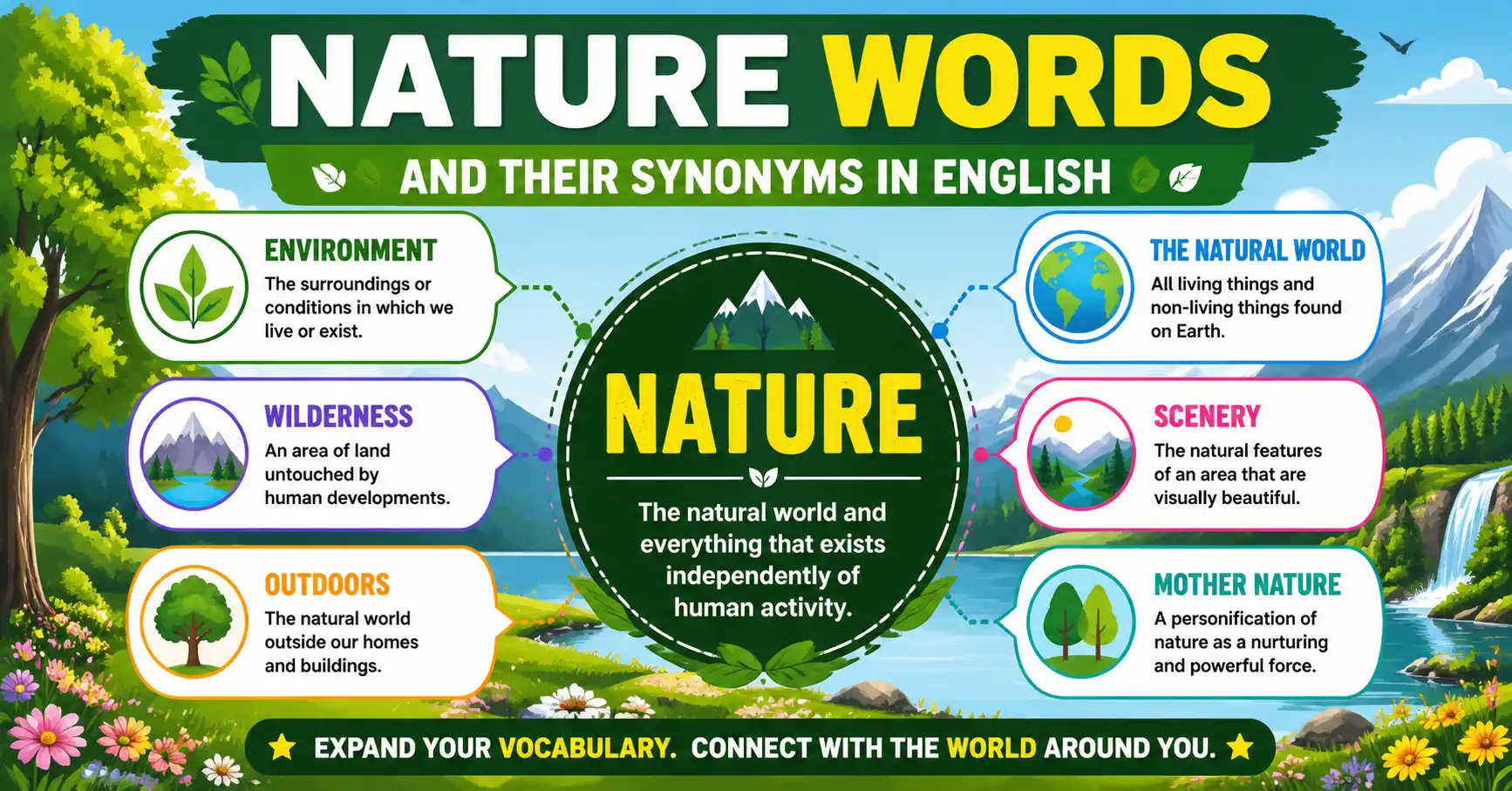
This guide on nature words and their synonyms English will help you upgrade your language with richer, more vivid alternatives. You’ll learn not just lists of synonyms, but how to use them correctly in real contexts. That’s what separates average writing from engaging, sensory storytelling.
As a travel writer with 13 years of experience, I’ve seen how the right word can transform a simple scene into something unforgettable. By the end of this article, you’ll know how to choose precise nature-related vocabulary, avoid common mistakes, and write descriptions that truly connect with your reader.
Quick Answer:
Nature words in English refer to vocabulary used to describe the natural world—such as forests, rivers, weather, and landscapes—and their synonyms are alternative words with similar meanings that add variety and precision to writing. Using synonyms like lush instead of green or serene instead of calm helps you create more vivid and engaging descriptions.
What Does “Nature Words” Mean?
Nature words are vocabulary items used to describe elements of the natural environment. These include:
- Landscapes (mountains, valleys, forests)
- Weather (rain, wind, sunshine)
- Natural features (rivers, oceans, deserts)
- Sensory impressions (fresh air, earthy smell)
In academic and descriptive writing, these words help you create imagery—language that allows the reader to visualize and feel a scene.
Why This Matters in Writing
According to academic writing standards, especially in IELTS Band 7+, using varied vocabulary shows lexical resource. Repeating simple words lowers your score. That’s why learning nature words and their synonyms English is essential for both creative and academic success.
Complete Synonyms List
Here are common nature-related words and their stronger, more expressive synonyms:
- Beautiful → Stunning, breathtaking, picturesque
- Green → Lush, verdant, fertile
- Calm → Serene, tranquil, peaceful
- Big → Vast, expansive, immense
- Small → Tiny, compact, delicate
- Bright → Radiant, glowing, vivid
- Dark → Gloomy, shadowy, dim
- Windy → Breezy, gusty, blustery
- Wet → Damp, soaked, humid
- Dry → Arid, parched, barren
These synonyms are not identical. Each carries a slightly different tone or intensity.
Comparison Table
| Word | Simple Meaning | Best Used When | Avoid When |
| Lush | Very green and healthy | Describing forests or gardens | Talking about dry climates |
| Serene | Calm and peaceful | Quiet lakes or countryside | Busy or noisy scenes |
| Vast | Very large | Deserts, oceans, skies | Small or enclosed places |
| Gloomy | Dark and depressing | Stormy weather | Bright, cheerful settings |
| Radiant | Bright and glowing | Sunlight or flowers | Low-light environments |
| Arid | Extremely dry | Deserts | Wet or tropical areas |
| Breezy | Light wind | Pleasant outdoor scenes | Strong storms |
| Verdant | Rich green vegetation | Formal writing | Casual conversation |
Formal vs Informal Synonyms
| Formal Word | Informal Alternative | Usage Context |
| Verdant | Green | Academic essays |
| Tranquil | Calm | General conversation |
| Expansive | Big | Reports or travel writing |
| Arid | Dry | Scientific or academic text |
| Picturesque | Pretty | Descriptive storytelling |
According to academic writing conventions, formal synonyms like verdant and tranquil are preferred in essays, while simpler words fit casual writing.
Real Example Sentences
Here are practical examples to show how these synonyms work:
- The forest was lush, filled with thick green trees.
- We enjoyed a serene walk by the quiet lake.
- The desert stretched across a vast landscape.
- Dark clouds created a gloomy atmosphere.
- The sunrise looked radiant over the mountains.
- The land was arid, with no signs of water.
- A breezy wind made the beach walk pleasant.
- The valley appeared verdant after the rainfall.
🌿 Travel Writer’s Tip:
In our experience helping writers, the strongest descriptions combine two sensory details—for example:
“a serene lake reflecting radiant golden sunlight” instead of just “a calm lake.”
When to Use vs When NOT to Use
When to Use Nature Synonyms
Use them when you want to:
- Avoid repetition in essays
- Create vivid imagery in storytelling
- Improve IELTS vocabulary score
- Add emotional tone to descriptions
When NOT to Use Them
Avoid using complex synonyms when:
- Your audience is beginner-level English learners
- Clarity is more important than style
- The synonym feels unnatural in context
For example:
- ❌ “The small park was vast” (incorrect usage)
- ❌ “The arid rainforest” (contradictory meaning)
Trust matters in writing. Overusing advanced words incorrectly reduces clarity.
Common Mistakes Writers Make
Even advanced learners struggle with these:
1. Using synonyms interchangeably
Not all synonyms mean the same thing. Serene and quiet are similar, but not identical.
2. Ignoring context
Words like arid only work in dry environments.
3. Overusing complex vocabulary
Writers we work with often try to impress with difficult words—but this can sound unnatural.
4. Mixing formal and informal tone
Example:
- ❌ “The verdant forest looked super cool”
5. Repetition despite knowing synonyms
Knowing synonyms is not enough—you must practice using them.
Tips and Best Practices
1. Learn in context
Always study synonyms in full sentences, not isolated lists.
2. Focus on imagery
Ask yourself: Can the reader see this scene clearly?
3. Use sensory language
Include:
- Sight (lush greenery)
- Sound (rustling leaves)
- Smell (earthy scent)
4. Practice rewriting
Take a simple sentence:
- “The forest is green”
Improve it:
- “The forest is lush and vibrant with life”
5. Balance simplicity and sophistication
Clear writing always wins over complicated writing.
🌍 Nature Writing Example:
“The vast desert shimmered under the radiant sun, its arid surface stretching endlessly into the horizon.”
Frequently Asked Questions
Q1: What are nature words in English?
A: Nature words are vocabulary used to describe the natural environment, including landscapes, weather, and ecosystems. These words help create vivid imagery in writing and are essential for essays, storytelling, and descriptive language development.
Q2: Why are synonyms important in nature writing?
A: Synonyms prevent repetition and make your writing more engaging. Using varied vocabulary allows you to express subtle differences in meaning, which improves clarity and helps your writing sound more natural and professional.
Q3: How can I learn nature synonyms easily?
A: The best way is to learn them in context. Read travel blogs, rewrite simple sentences, and practice using new words in your own writing. This builds both understanding and confidence over time.
Q4: Are nature synonyms useful for IELTS writing?
A: Yes. IELTS examiners assess lexical resource, and using varied vocabulary improves your score. However, accuracy matters more than complexity, so always choose words you fully understand.
Q5: What is the difference between “lush” and “verdant”?
A: Both mean green and full of vegetation, but lush is more common and informal, while verdant is more formal and often used in academic or descriptive writing.
Q6: Can I use advanced nature words in casual writing?
A: You can, but use them carefully. Overusing formal vocabulary in casual writing can sound unnatural. Choose words that match your audience and purpose.
CONCLUSION
Learning nature words and their synonyms English is one of the fastest ways to improve your descriptive writing. You now understand how to choose the right word, avoid common mistakes, and write with clarity and impact. Strong vocabulary is not about complexity—it’s about precision and expression.
You might also want to read our guide on descriptive words for landscapes to continue building your skills.
Keep practicing, keep observing the world around you—and let your words bring nature to life.

Andrew Powell is a travel writer and nature journalist who has spent over a decade writing about places, landscapes, and the natural world — and thinking carefully about the words that do those subjects justice ( Biography ).