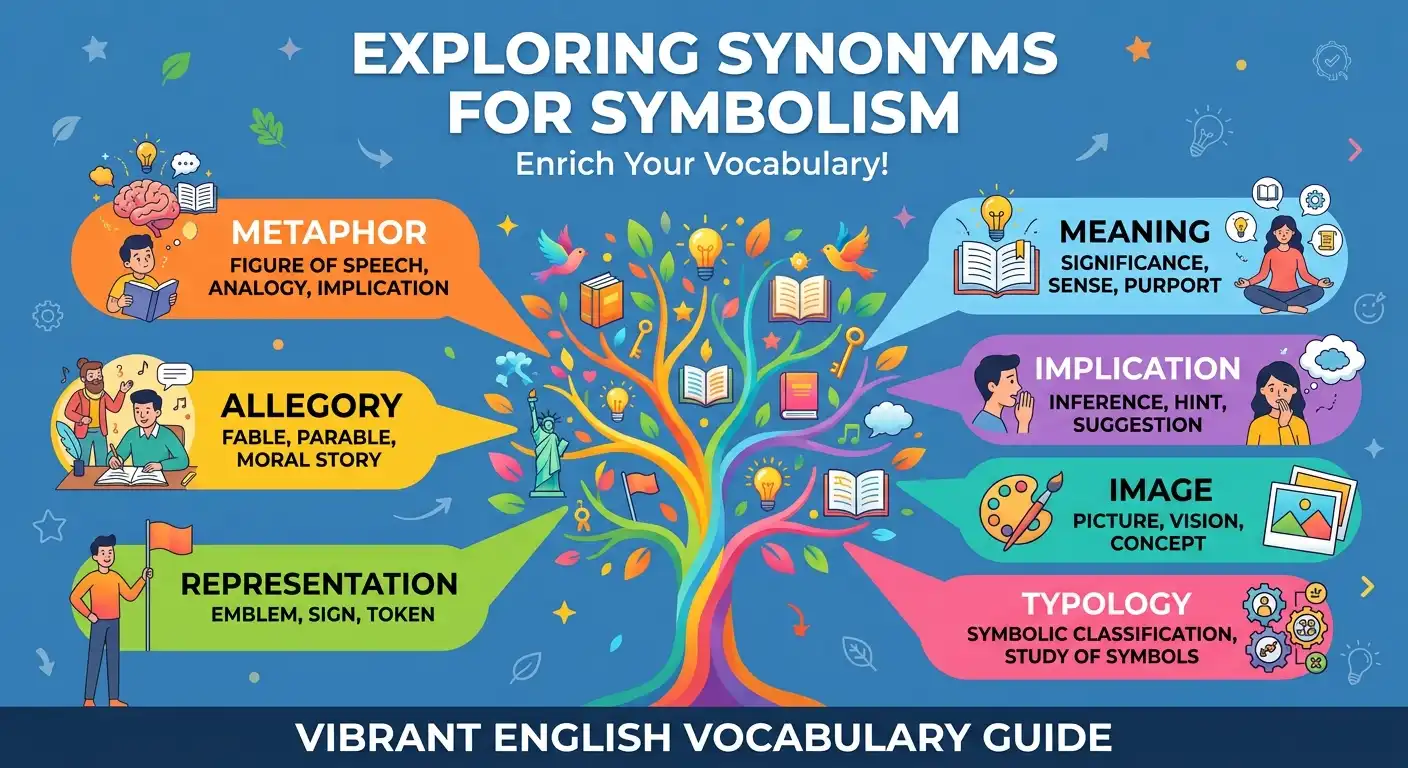
Finding the right synonyms for symbolism can instantly elevate your writing and deepen your audience’s understanding. When you explore synonyms for symbolism, you uncover creative ways to express complex meanings without repeating the same word. Learning dynamic synonyms for symbolism gives you the flexibility to describe hidden meanings in literature, art, branding, and daily conversations.
Imagine watching a movie where a dark red rose appears every time a character makes a difficult choice. The rose is not just a plant; it represents passion, sacrifice, and danger. That connection between a simple object and a big idea is what we call symbolism. In very simple terms, symbolism means using one thing to stand for something else. When a heart represents love or a dove represents peace, that is symbolism at work.
Understanding this concept is essential for many people:
- Students can write deeper essays and analyze literature with greater nuance.
- Bloggers can create engaging stories that resonate with readers on a deeper emotional level.
- Content writers can craft memorable brand messaging using rich figurative language.
- Daily English users can express subtle ideas more clearly and vividly.
“Words hold power, but symbols give that power shape and emotion.”
Using varied vocabulary keeps your readers interested and makes your communication much more impactful across any medium.
“To master language is to understand both what a word says and what it softly suggests.”
Linguistic Profile of Symbolism
Connotative Meaning
While the literal definition of symbolism is the use of symbols to represent ideas, its connotative meaning carries depth, mystery, artfulness, and hidden wisdom. It suggests that a deeper truth lies beneath the surface layer of a text or image.
Etymology
- Origin: Ancient Greek symbolon (a sign, token, or mark used for identification).
- Development: Shifted into Late Latin as symbolismus and Middle French as symbolisme.
- Modern Usage: Entered Modern English in the 19th century to describe the artistic and literary practice of using symbolic representations.
Pronunciation (IPA)
- US IPA: /ˈsɪm.bə.lɪ.zəm/
- UK IPA: /ˈsɪm.bəl.ɪ.zəm/
Syllables & Affixation
- Syllable Breakdown: sym-bol-ism (3 syllables)
- Root Word: Symbol
- Suffix: -ism (a noun suffix denoting a practice, system, or philosophy)
Symbolism vs. Related Concepts: Comparison Table
| Keyword | Meaning | Usage Type | Context |
| Symbolism | The practice of using symbols to represent deeper ideas. | Formal / Creative | Literature, fine arts, cultural studies |
| Imagery | Visual descriptions that create mental pictures in the mind. | Creative / Expressive | Poetry, descriptive essays, storytelling |
| Allegory | A complete story where characters represent abstract truths. | Formal / Literary | Fables, moral tales, political satire |
| Metaphor | Direct comparison between two unlike things without using “like”. | Formal / Casual | Everyday speech, persuasive writing, poetry |
| Emblem | A concrete object or design representing an organization or idea. | Professional / Official | Badges, logos, heraldry, national flags |
| Iconography | The visual imagery or symbols used in a work of art or culture. | Academic / Professional | Art history, media studies, religious studies |
Prototype Meaning and Categorization
At its core, symbolism belongs to the linguistic category of Figurative Representation. The prototype model places symbolism at the center of how human minds connect physical objects with abstract thoughts.
[ ABSTRACT CONCEPT ]
│
(Mental Connection)
│
▼
[ CONCRETE SYMBOL ]
Main Sub-Categories:
- Literary Devices: Metaphor, allegory, imagery, motif, simile.
- Visual & Graphic Marks: Emblem, insignia, crest, logo, mark, token.
- Indirect Communication: Allusion, suggestion, evocation, intimation.
50 Essential Synonyms for Symbolism
“The right word at the right moment unlocks hidden dimensions in every story.”
1. Representation
- Pronunciation: US: /ˌrɛp.rɪ.zɛnˈteɪ.ʃən/ | UK: /ˌrɛp.rɪ.zənˈteɪ.ʃən/
- Meaning: Showing something using a picture, sign, or object.
- Examples:
- The painting is a clear representation of hope.
- The teacher used a globe as a physical representation of the Earth.
2. Imagery
- Pronunciation: US: /ˈɪm.ɪdʒ.ri/ | UK: /ˈɪm.ɪdʒ.ər.i/
- Meaning: Pictures made with words to describe an idea.
- Examples:
- Her story is full of beautiful ocean imagery.
- Bright imagery makes the poem fun to read.
3. Allegory
- Pronunciation: US: /ˈæl.ə.ɡɔːr.i/ | UK: /ˈæl.ɪ.ɡər.i/
- Meaning: A story that carries a hidden moral lesson.
- Examples:
- The movie is an allegory about working together.
- Old fables use animals in an allegory for human life.
4. Metaphor
- Pronunciation: US: /ˈmɛt.ə.fɔːr/ | UK: /ˈmɛt.ə.fər/
- Meaning: Comparing two things by calling one thing another.
- Examples:
- Saying “time is money” is a famous metaphor.
- He used a sports metaphor to explain his goal.
5. Emblem
- Pronunciation: US: /ˈɛm.bləm/ | UK: /ˈɛm.bləm/
- Meaning: A special sign that shows what a group stands for.
- Examples:
- The eagle is an emblem of freedom.
- Every team member wore an emblem on their jacket.
6. Iconography
- Pronunciation: US: /ˌaɪ.kəˈnɑː.ɡrə.fi/ | UK: /ˌaɪ.kəˈnɒɡ.rə.fi/
- Meaning: The set of pictures and signs used in art.
- Examples:
- Modern religious iconography uses soft lighting.
- The film uses comic book iconography throughout.
7. Tokenism
- Pronunciation: US: /ˈtoʊ.kən.ɪ.zəm/ | UK: /ˈtəʊ.kən.ɪ.zəm/
- Meaning: Using a small sign to show a bigger effort.
- Examples:
- Giving a small prize was just a gesture of tokenism.
- The company moved past tokenism to make real changes.
8. Analogy
- Pronunciation: US: /əˈnæl.ə.dʒi/ | UK: /əˈnæl.ə.dʒi/
- Meaning: Showing how two different things are alike.
- Examples:
- My teacher made an analogy between a computer and a brain.
- The simple analogy helped everyone understand the project.
9. Signification
- Pronunciation: US: /ˌsɪɡ.nə.fɪˈkeɪ.ʃən/ | UK: /ˌsɪɡ.nɪ.fɪˈkeɪ.ʃən/
- Meaning: The special message or meaning behind a sign.
- Examples:
- We discussed the true signification of the ancient ring.
- The gesture carried deep emotional signification for them.
10. Denotation
- Pronunciation: US: /ˌdiː.noʊˈteɪ.ʃən/ | UK: /ˌdiː.nəʊˈteɪ.ʃən/
- Meaning: The exact literal meaning of a sign or word.
- Examples:
- The denotation of a red light is to stop.
- Look up the strict denotation in the dictionary.
11. Typology
- Pronunciation: US: /taɪˈpɑː.lə.dʒi/ | UK: /taɪˈpɒl.ə.dʒi/
- Meaning: A system that sorts things into symbolic types.
- Examples:
- The scholar explained the typology of hero stories.
- We studied the typology of medieval symbols.
12. Figurative Expression
- Pronunciation: US: /ˈfɪɡ.jɚ.ə.tɪv ɪkˈsprɛʃ.ən/ | UK: /ˈfɪɡ.ər.ə.tɪv ɪkˈsprɛʃ.ən/
- Meaning: Words used in a creative way, not literally.
- Examples:
- “Cold feet” is a popular figurative expression.
- Her speech was full of lively figurative expression.
13. Simile
- Pronunciation: US: /ˈsɪm.ə.li/ | UK: /ˈsɪm.ɪ.li/
- Meaning: Comparing two things using the words “like” or “as”.
- Examples:
- “Brave as a lion” is a classic simile.
- She used a simple simile to describe the snow.
14. Personification
- Pronunciation: US: /pɚˌsɑː.nə.fɪˈkeɪ.ʃən/ | UK: /pəˌsɒn.ɪ.fɪˈkeɪ.ʃən/
- Meaning: Giving human qualities to objects or animals.
- Examples:
- Saying “the wind whispered” is an example of personification.
- The cartoon uses personification to make cars talk.
15. Motif
- Pronunciation: US: /moʊˈtiːf/ | UK: /məʊˈtiːf/
- Meaning: An idea or pattern that repeats in a story.
- Examples:
- Light and darkness form a central motif in the novel.
- The designer added a floral motif to the wallpaper.
16. Characterization
- Pronunciation: US: /ˌkær.ik.tɚ.əˈzeɪ.ʃən/ | UK: /ˌkær.ək.tə.raɪˈzeɪ.ʃən/
- Meaning: The way a writer presents a person or idea.
- Examples:
- The villain’s characterization felt rich and believable.
- She used dark clothing as part of the hero’s characterization.
17. Comparison
- Pronunciation: US: /kəmˈpær.ə.sən/ | UK: /kəmˈpær.ɪ.sən/
- Meaning: Looking at two things to see how they match.
- Examples:
- The author drew a clear comparison between summer and youth.
- A quick comparison showed the main differences.
18. Image
- Pronunciation: US: /ˈɪm.ɪdʒ/ | UK: /ˈɪm.ɪdʒ/
- Meaning: A picture in your mind or on paper.
- Examples:
- The rising sun is a common image for hope.
- The author created a strong mental image of the quiet woods.
19. Token
- Pronunciation: US: /ˈtoʊ.kən/ | UK: /ˈtəʊ.kən/
- Meaning: A small item given to show a feeling.
- Examples:
- She gave him a ring as a token of friendship.
- Keep this card as a small token of my gratitude.
20. Badge
- Pronunciation: US: /bædʒ/ | UK: /bædʒ/
- Meaning: A sign worn to show rank or membership.
- Examples:
- The officer wore a shiny metal badge.
- Courage is a true badge of honor.
21. Mark
- Pronunciation: US: /mɑːrk/ | UK: /mɑːk/
- Meaning: A visible print or sign that gives information.
- Examples:
- The crown is a mark of royalty.
- Leaving a clean mark on history takes hard work.
22. Insignia
- Pronunciation: US: /ɪnˈsɪɡ.ni.ə/ | UK: /ɪnˈsɪɡ.ni.ə/
- Meaning: An official badge or stamp showing authority.
- Examples:
- The pilot’s jacket featured a gold insignia.
- They printed the royal insignia on the documents.
23. Crest
- Pronunciation: US: /krɛst/ | UK: /krɛst/
- Meaning: A traditional design representing a family or school.
- Examples:
- The school crest shows an open book and a star.
- Their family crest hangs above the fireplace.
24. Logo
- Pronunciation: US: /ˈloʊ.ɡoʊ/ | UK: /ˈləʊ.ɡəʊ/
- Meaning: A graphic design that stands for a company.
- Examples:
- The brand updated its logo last week.
- A simple logo is easy to recognize.
25. Mascot
- Pronunciation: US: /ˈmæs.kɑːt/ | UK: /ˈmæs.kət/
- Meaning: A character chosen to bring good luck and represent a group.
- Examples:
- The owl mascot cheered for the home team.
- Our school mascot is a friendly bear.
26. Totem
- Pronunciation: US: /ˈtoʊ.təm/ | UK: /ˈtəʊ.təm/
- Meaning: A natural object or animal serving as an emblem.
- Examples:
- The tribe carved a wooden totem for protection.
- The wolf was seen as a powerful totem of loyalty.
27. Attribute
- Pronunciation: US: /ˈæt.rɪ.bjuːt/ | UK: /ˈæt.rɪ.bjuːt/
- Meaning: A symbol closely linked to a specific person or role.
- Examples:
- The trident is a key attribute of the sea god.
- Kindness is an attribute we all admire.
28. Figure
- Pronunciation: US: /ˈfɪɡ.jɚ/ | UK: /ˈfɪɡ.ər/
- Meaning: A shape or person that represents an idea.
- Examples:
- The statue is a majestic figure of justice.
- She became a famous figure of peace in her town.
29. Type
- Pronunciation: US: /taɪp/ | UK: /taɪp/
- Meaning: A person or object that stands as an example of a class.
- Examples:
- The knight is a classic type of bravery.
- This quiet building is a fine type of old architecture.
30. Picture
- Pronunciation: US: /ˈpɪk.tʃɚ/ | UK: /ˈpɪk.tʃər/
- Meaning: A drawing or scene that shows an idea clearly.
- Examples:
- Her story draws a clear picture of city life.
- The calm lake was a perfect picture of peace.
31. Shadow
- Pronunciation: US: /ˈʃæd.oʊ/ | UK: /ˈʃæd.əʊ/
- Meaning: A faint sign or hint of something deeper.
- Examples:
- The quiet scene was a shadow of the coming storm.
- Doubt cast a small shadow over his face.
32. Prefiguration
- Pronunciation: US: /ˌpriː.fɪɡ.jɚˈeɪ.ʃən/ | UK: /ˌpriː.fɪɡ.ərˈeɪ.ʃən/
- Meaning: A symbol that hints at something in the future.
- Examples:
- The dark clouds were a prefiguration of hard times.
- Early events were a subtle prefiguration of the climax.
33. Allusion
- Pronunciation: US: /əˈluː.ʒən/ | UK: /əˈluː.ʒən/
- Meaning: A indirect reference to a famous story or idea.
- Examples:
- The author made a clever allusion to Greek myths.
- His comment was a brief allusion to history.
34. Illustration
- Pronunciation: US: /ˌɪl.əˈstreɪ.ʃən/ | UK: /ˌɪl.əˈstreɪ.ʃən/
- Meaning: An example or drawing that makes an idea clear.
- Examples:
- This chart is a great illustration of growth.
- The story serves as an illustration of honesty.
35. Exemplification
- Pronunciation: US: /ɪɡˌzɛm.plə.fɪˈkeɪ.ʃən/ | UK: /ɪɡˌzɛm.plɪ.fɪˈkeɪ.ʃən/
- Meaning: Giving a clear model or example of something.
- Examples:
- Her hard work is an exemplification of success.
- The speech offered a fine exemplification of leadership.
36. Manifestation
- Pronunciation: US: /ˌmæn.ə.fɛˈsteɪ.ʃən/ | UK: /ˌmæn.ɪ.fɛˈsteɪ.ʃən/
- Meaning: An outward sign that shows an inner truth.
- Examples:
- A warm smile is a natural manifestation of joy.
- The parade was a vibrant manifestation of unity.
37. Expression
- Pronunciation: US: /ɪkˈsprɛʃ.ən/ | UK: /ɪkˈsprɛʃ.ən/
- Meaning: A way of showing thoughts, feelings, or ideas.
- Examples:
- Art is a beautiful expression of human emotion.
- Music gives us a free expression of creativity.
38. Designation
- Pronunciation: US: /ˌdɛz.ɪɡˈneɪ.ʃən/ | UK: /ˌdɛz.ɪɡˈneɪ.ʃən/
- Meaning: A name or symbol given to show a specific role.
- Examples:
- The star on the map is a designation for the capital city.
- He received the special designation of team leader.
39. Indication
- Pronunciation: US: /ˌɪn.dəˈkeɪ.ʃən/ | UK: /ˌɪn.dɪˈkeɪ.ʃən/
- Meaning: A sign that points to a fact or condition.
- Examples:
- High fever is a clear indication of sickness.
- Her smile was a positive indication of agreement.
40. Signal
- Pronunciation: US: /ˈsɪɡ.nəl/ | UK: /ˈsɪɡ.nəl/
- Meaning: An action or object used to send a message.
- Examples:
- The green light was a signal to go forward.
- Raising a hand is a quiet signal for help.
41. Symbolization
- Pronunciation: US: /ˌsɪm.bəl.əˈzeɪ.ʃən/ | UK: /ˌsɪm.bəl.aɪˈzeɪ.ʃən/
- Meaning: The act of representing an idea with a symbol.
- Examples:
- The symbolization of hope in the poem is very strong.
- Artists use color choices for emotional symbolization.
42. Suggestion
- Pronunciation: US: /səˈdʒɛs.tʃən/ | UK: /səˈdʒɛs.tʃən/
- Meaning: Hinting at an idea without saying it directly.
- Examples:
- There was a gentle suggestion of spring in the warm air.
- The movie leaves the ending open to reader suggestion.
43. Intimation
- Pronunciation: US: /ˌɪn.təˈmeɪ.ʃən/ | UK: /ˌɪn.tɪˈmeɪ.ʃən/
- Meaning: A subtle hint or delicate indirect sign.
- Examples:
- She gave a slight intimation that she was ready to leave.
- The quiet music provided an intimation of danger.
44. Evocation
- Pronunciation: US: /ˌɛv.əˈkeɪ.ʃən/ | UK: /ˌɛv.əˈkeɪ.ʃən/
- Meaning: Calling up strong feelings or memories.
- Examples:
- The old song was a powerful evocation of childhood.
- The book presents a vivid evocation of country life.
45. Embodiment
- Pronunciation: US: /ɪmˈbɑː.di.mənt/ | UK: /ɪmˈbɒd.i.mənt/
- Meaning: A person or object that gives physical form to an idea.
- Examples:
- The volunteer is the embodiment of kindness.
- The new park is an embodiment of community spirit.
46. Parable
- Pronunciation: US: /ˈpær.ə.bəl/ | UK: /ˈpær.ə.bəl/
- Meaning: A short story designed to teach a moral lesson.
- Examples:
- The teacher shared a simple parable about honesty.
- The ancient parable taught the importance of patience.
47. Fable
- Pronunciation: US: /ˈfeɪ.bəl/ | UK: /ˈfeɪ.bəl/
- Meaning: A story with talking animals that teaches a lesson.
- Examples:
- The tortoise and the hare is a world-famous fable.
- Every fable contains a clear moral message.
48. Trope
- Pronunciation: US: /troʊp/ | UK: /trəʊp/
- Meaning: A figurative idea or theme commonly found in stories.
- Examples:
- The brave hero’s journey is a popular story trope.
- The movie subverted the usual mystery trope.
49. Parallel
- Pronunciation: US: /ˈpær.ə.lɛl/ | UK: /ˈpær.ə.lɛl/
- Meaning: A feature or situation that matches another closely.
- Examples:
- The author created a parallel between the two characters.
- There is a strong parallel between history and today.
50. Correspondence
- Pronunciation: US: /ˌkɔːr.əˈspɑːn.dəns/ | UK: /ˌkɒr.ɪˈspɒn.dəns/
- Meaning: A direct connection or agreement between two things.
- Examples:
- There is a clear correspondence between work and success.
- The symbol shows a close correspondence to real life.
Antonyms of Symbolism
Understanding opposites helps clarify meaning. Here are the primary antonyms of symbolism:
- Literalness: The exact, plain meaning of words without figurative interpretations.
- Factualness: Adherence strictly to concrete facts rather than abstract signs.
- Directness: Clear and straightforward expression without hidden messages.
- Reality: Actual objects and events in physical existence, as opposed to symbolic representation.
- Plainness: Unadorned communication without metaphor, imagery, or allegory.
Frequently Asked Questions (FAQs)
1. What is the main difference between a symbol and a metaphor?
A symbol is a physical object or sign that stands for an abstract idea (e.g., a dove standing for peace). A metaphor is a figure of speech that directly compares two different things without using “like” or “as” (e.g., “life is a highway”).
2. Why do authors use symbolism in literature?
Authors use symbolism to add depth, emotion, and layered meaning to their writing. It allows readers to uncover subtle themes and connect emotionally with the narrative rather than just reading surface events.
3. Which synonym for symbolism is best for academic writing?
Words like representation, allegory, iconography, and exemplification are well-suited for academic essays and literary analysis due to their precise, formal tone.
4. Can a word have both a literal meaning and symbolism?
Yes. A word or object usually has a literal meaning (its denotation) and a symbolic meaning (its connotation). For example, a campfire is literally burning wood, but symbolically it can represent warmth, survival, or storytelling.
5. How can I choose the best synonym for symbolism in my writing?
Consider your context and audience. For graphic design, use logo or emblem. For literature, use allegory or motif, everyday speech, use representation or image.
Conclusion
Expanding your knowledge of synonyms for symbolism is one of the most effective ways to sharpen your English skills. Whether you choose formal terms like allegory and iconography or accessible words like emblem and image, using fresh vocabulary prevents your prose from feeling repetitive. Strong vocabulary choices help you explain complex themes smoothly and keep your readers fully engaged from start to finish.
When you practice incorporating these words into your daily writing, essays, emails, and conversations, you build real creative confidence. Start by replacing the word “symbolism” in your next essay or blog post with a more specific alternative like motif or representation. Over time, using these nuanced terms will become second nature, turning your writing into a vivid, persuasive experience for your readers.
“Varied words open new doors to clearer, more powerful communication.”
Keep learning, keep writing, and enjoy discovering how rich vocabulary transforms every story you tell.
“Language is a canvas, and synonyms are the rich colors that bring your thoughts to life.”