Have you ever seen a cute turtle make its way across a warm sandy path? It moves with ease, taking one tiny step at a time. This calm, steady movement is how we often walk when we are not in a rush. However, writing the words “walk slowly” over and over can make your stories feel very dull. Are you looking for the best synonyms for walk-slowly to spice up your English writing?
To walk slowly means to move on foot at a relaxed or gentle speed. Learning these synonyms for walk-slowly is highly useful for everyone. Students can get much better grades on school essays. Bloggers and content writers can make their articles way more exciting to read. Daily English users can express themselves clearly in text messages. Let us explore these fifty amazing words to upgrade your vocabulary!
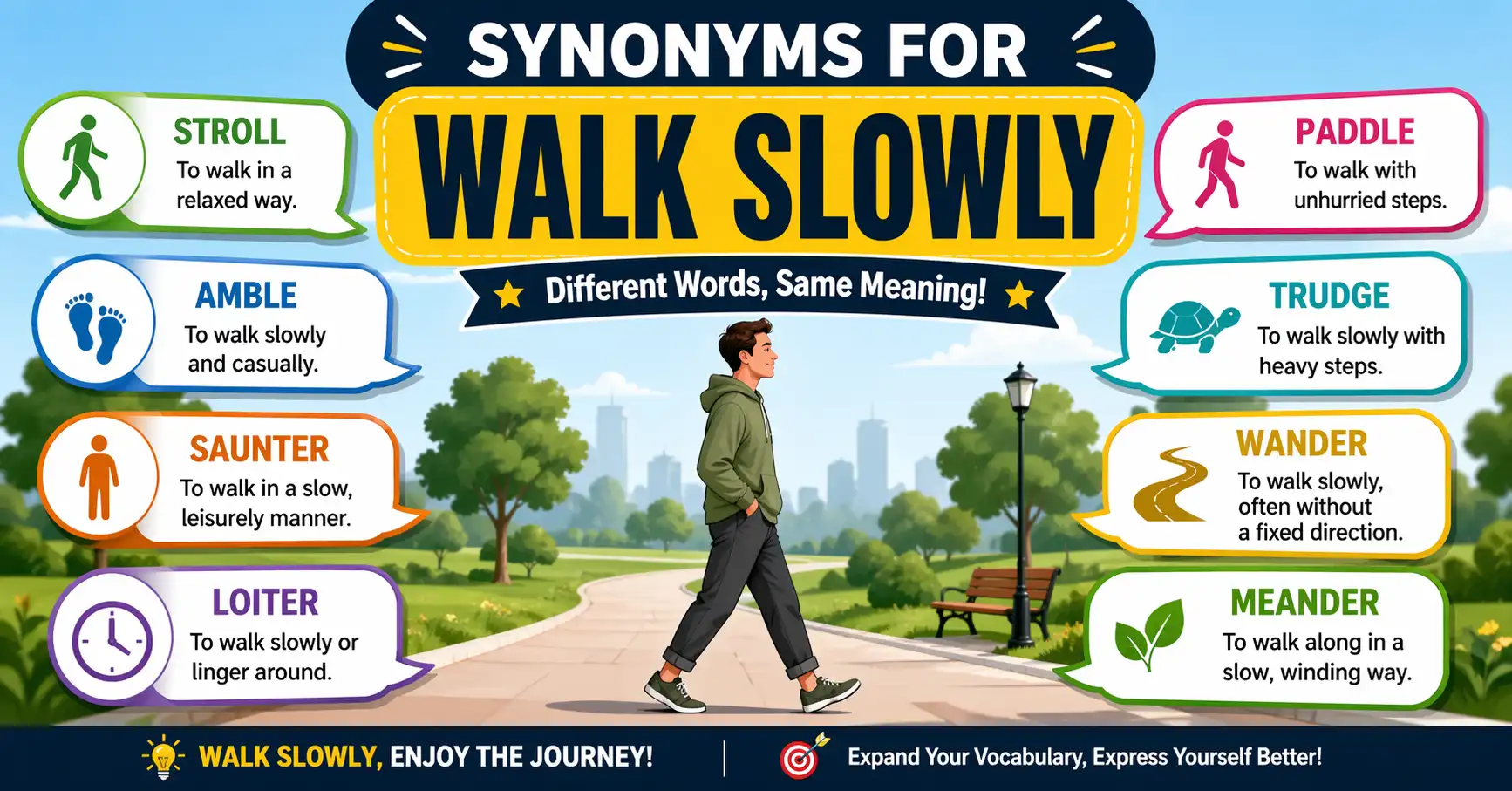
1. Stroll
Meaning: To walk slowly in a happy and relaxed way.
Examples:
- We like to stroll through the park on sunny mornings.
- They stroll along the beach to watch the sunset.
2. Amble
Meaning: To walk at an easy and slow pace.
Examples:
- The tourists amble around the old town square.
- We can amble down the street to the ice cream shop.
3. Saunter
Meaning: To walk slowly with confidence and pride.
Examples:
- He would saunter into the classroom with a big smile.
- The actors saunter across the red carpet for photos.
4. Meander
Meaning: To walk along a winding path without rushing.
Examples:
- The children meander through the deep woods looking for berries.
- We watched the shoppers meander down the busy market aisle.
5. Mosey
Meaning: To walk along in a very relaxed manner.
Examples:
- I think I will mosey on over to the kitchen for a snack.
- The cows mosey across the green field to eat grass.
6. Ramble
Meaning: To walk for pleasure in the quiet countryside.
Examples:
- They love to ramble across the hills on weekends.
- We decided to ramble along the riverbank after lunch.
7. Wander
Meaning: To walk around without a clear plan or goal.
Examples:
- The sheep wander away from the farm.
- I like to wander through the bookstore for hours.
8. Trudge
Meaning: To walk slowly because your feet feel heavy and tired.
Examples:
- The hikers trudge up the snowy mountain trail.
- We had to trudge back home in the heavy rain.
9. Plod
Meaning: To walk with slow and heavy steps.
Examples:
- The tired horse had to plod along the dusty road.
- He will plod through his chores until they are done.
10. Shuffle
Meaning: To walk by dragging your feet along the ground.
Examples:
- Please do not shuffle your feet on the clean carpet.
- The sleepy boy began to shuffle toward the bathroom.
11. Creep
Meaning: To walk slowly and quietly so no one hears you.
Examples:
- The cat will creep toward the little bird.
- I try to creep past my baby brother’s bedroom.
12. Tiptoe
Meaning: To walk on your toes to stay very quiet.
Examples:
- We tiptoe down the stairs late at night.
- You must tiptoe if you want to surprise them.
13. Totter
Meaning: To walk slowly and unsteadily like you might fall.
Examples:
- The old table made the vase totter and shake.
- Babies totter when they take their first steps.
14. Hobble
Meaning: To walk slowly and with difficulty because of pain.
Examples:
- He had to hobble to his car with a sore foot.
- The injured player will hobble off the soccer field.
15. Waddle
Meaning: To walk with short steps while swaying side to side.
Examples:
- The yellow ducks waddle down to the cold pond.
- Penguins look very funny when they waddle on ice.
16. Toddle
Meaning: To walk with short and unsteady steps like a baby.
Examples:
- Watch the little child toddle across the living room.
- Puppies toddle around when they are very young.
17. Loiter
Meaning: To walk slowly or wait around a place for no reason.
Examples:
- The guard asked the teens not to loiter near the gate.
- People often loiter outside the theater after the movie.
18. Linger
Meaning: To walk slowly because you do not want to leave.
Examples:
- Guests like to linger in the garden after dinner.
- We linger near the warm fireplace on cold days.
19. Dawdle
Meaning: To walk very slowly and take too much time.
Examples:
- Do not dawdle on your way to school today.
- Children often dawdle when they do not want to sleep.
20. Lag
Meaning: To walk slowly and fall behind your friends.
Examples:
- If you lag behind, you might get lost in the forest.
- The youngest runner began to lag near the end of the race.
21. Drag
Meaning: To walk slowly because you feel sad or weak.
Examples:
- He had to drag himself out of bed this morning.
- The kids drag their feet when summer vacation ends.
22. Slink
Meaning: To walk slowly and quietly to avoid being seen.
Examples:
- The fox will slink into the bushes to hide.
- He tried to slink out of the meeting early.
23. Sneak
Meaning: To walk slowly and secretly past someone.
Examples:
- We sneak into the kitchen to grab a cookie.
- The spy had to sneak past the front desk.
24. Prowl
Meaning: To walk slowly and quietly like a wild cat hunting.
Examples:
- Wolves prowl through the dark woods at night.
- Tigers prowl silently to catch their prey.
25. Sidle
Meaning: To walk slowly and sideways to stay quiet.
Examples:
- She will sidle up to her dad to ask for money.
- I saw him sidle toward the exit door.
26. Lumber
Meaning: To walk slowly and heavily because you are big.
Examples:
- The giant bears lumber through the thick forest.
- Heavy trucks lumber up the steep hill.
27. Limp
Meaning: To walk slowly because one of your legs is hurt.
Examples:
- She had a bad fall and began to limp.
- The dog started to limp after running in the yard.
28. Promenade
Meaning: To walk slowly in public so people can see you.
Examples:
- Families promenade along the sunny boardwalk.
- The guests promenade around the grand ballroom.
29. Pace
Meaning: To walk slowly back and forth because you are worried.
Examples:
- He would pace the floor while waiting for news.
- The nervous father began to pace in the hospital.
30. Stagger
Meaning: To walk slowly and look like you are going to fall.
Examples:
- The tired climbers stagger back to their camp.
- He will stagger if he carries that heavy box.
31. Tread
Meaning: To walk slowly and step very carefully on the ground.
Examples:
- You must tread softly so you do not wake the dog.
- We tread carefully on the slippery ice.
32. Inch
Meaning: To walk or move forward a tiny bit at a time.
Examples:
- Cars inch forward in the heavy traffic jam.
- The snails inch along the wet garden wall.
33. Clump
Meaning: To walk slowly with loud and heavy footsteps.
Examples:
- The children clump upstairs in their muddy boots.
- We could hear him clump around the attic.
34. Tramp
Meaning: To walk slowly and heavily over a long distance.
Examples:
- We had to tramp through the muddy fields.
- Soldiers tramp across the rough dirt road.
35. Trek
Meaning: To walk slowly over a hard and long path.
Examples:
- They trek across the dry desert with water.
- We trek up the mountain to see the view.
36. Pad
Meaning: To walk slowly and softly without making a sound.
Examples:
- The cat will pad across the wooden floor.
- I heard her pad down the hallway in slippers.
37. Stalk
Meaning: To walk slowly and quietly to follow a target.
Examples:
- Lions stalk their prey in the tall yellow grass.
- The hunter will stalk the deer through the trees.
38. Patrol
Meaning: To walk slowly around an area to guard it.
Examples:
- Police officers patrol the neighborhood to keep it safe.
- Guards patrol the castle walls every night.
39. Straggle
Meaning: To walk slowly and get separated from the group.
Examples:
- A few cows straggle behind the rest of the herd.
- The tired runners straggle across the finish line.
40. Glide
Meaning: To walk slowly and smoothly with no effort.
Examples:
- Dancers glide across the floor during the waltz.
- Swimmers glide through the cool water.
41. Drift
Meaning: To walk slowly as if the wind is moving you.
Examples:
- Crowds drift out of the stadium after the game.
- We watch clouds drift across the blue sky.
42. Stomp
Meaning: To walk slowly and heavily because you are angry.
Examples:
- Angry children stomp their feet on the ground.
- Do not stomp out of the room like that.
43. Prance
Meaning: To walk slowly with springy and happy steps.
Examples:
- Happy deer prance through the open meadow.
- The kids prance around the yard in their costumes.
44. Swagger
Meaning: To walk slowly to show off how cool you are.
Examples:
- He likes to swagger when he wins a game.
- The players swagger onto the field before kickoff.
45. Mope
Meaning: To walk slowly because you feel unhappy or bored.
Examples:
- Do not mope around the house on a rainy day.
- The sad boy began to mope in his bedroom.
46. File
Meaning: To walk slowly in a straight line behind someone.
Examples:
- Students file into the gym for the assembly.
- The soldiers file past the general.
47. Hike
Meaning: To walk slowly up a mountain or through a forest.
Examples:
- We love to hike in the mountains during autumn.
- They hike along the river trail every weekend.
48. Slither
Meaning: To walk slowly while sliding close to the ground.
Examples:
- Snakes slither through the green grass.
- We watched the worms slither in the wet mud.
49. Tarry
Meaning: To walk slowly and delay leaving a place.
Examples:
- Do not tarry on your way back from the store.
- We tend to tarry at our favorite bakery.
50. Shamble
Meaning: To walk slowly and clumsily while dragging your feet.
Examples:
- The zombies shamble slowly through the dark streets.
- He would shamble out of bed on Monday mornings.
Conclusion
Learning different synonyms for walk-slowly is an amazing way to boost your writing, blogging, speaking, and daily communication. When you use diverse words, your stories and ideas instantly become much more interesting. We encourage you to practice these fifty excellent words in your school essays, work emails, and daily conversations. The more you use them, the more natural they will sound. Keep practicing and watch your English vocabulary shine!
SEO EXTRAS
SEO Title:
Meta Description:

Andrew Powell is a travel writer and nature journalist who has spent over a decade writing about places, landscapes, and the natural world — and thinking carefully about the words that do those subjects justice ( Biography ).