Introduction
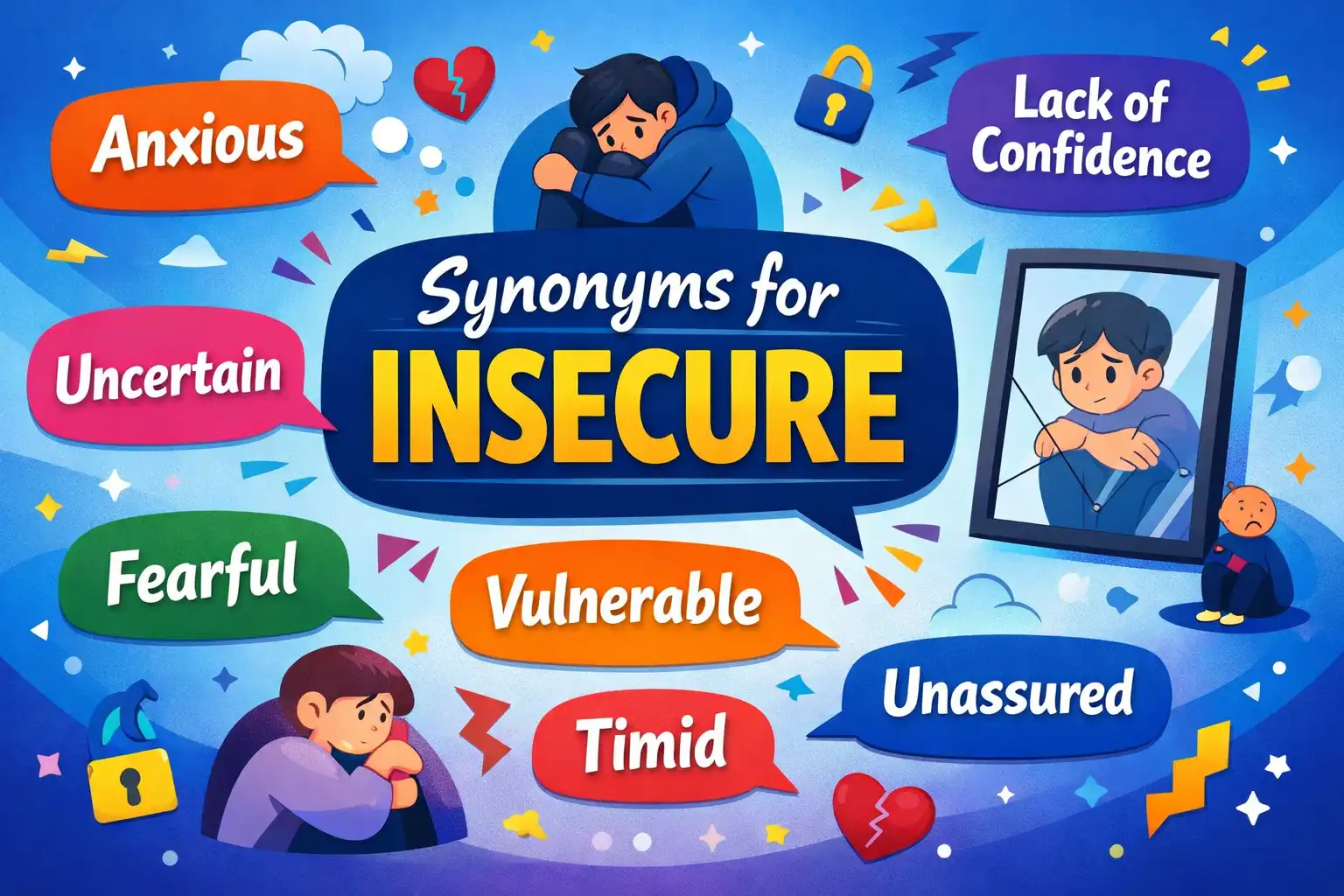
Synonyms for insecure are words that carry the same or similar meaning as “insecure” — a word that describes feeling unsafe, unsure, or lacking confidence. When someone feels insecure, they doubt themselves, feel anxious about their place in a situation, or feel emotionally unprotected. Knowing synonyms for insecure helps you express these feelings more precisely and powerfully, whether you are writing an essay, a blog post, or having a deep conversation. The more synonyms for insecure you know, the richer and more expressive your English becomes.
Imagine you are writing a story about a character who feels uncertain before a big job interview. You could say she felt “insecure” — but that feels flat and overused. What if you wrote that she felt vulnerable, apprehensive, or self-doubting instead? Suddenly, the sentence feels alive and real. That is the power of vocabulary. One right word paints a thousand pictures.
“The difference between the almost right word and the right word is the difference between the lightning bug and the lightning.” — Mark Twain
This word is useful for everyone. Students use it in essays and creative writing. Bloggers use it to keep their content fresh and engaging. Content writers use it to avoid repeating the same word. And daily English users use it to express emotions more clearly in conversations, texts, and emails. If you have ever searched for a better way to say “insecure,” this article is your complete guide.
“Vocabulary is the clothing of your thoughts.” — Northrop Frye
Comparison Table: Key Synonyms at a Glance
| Keyword | Meaning | Usage Type | Context |
|---|---|---|---|
| Vulnerable | Open to being hurt emotionally or physically | Emotional / Literary | Relationships, therapy, writing |
| Anxious | Feeling nervous or worried about something | Casual / Clinical | Daily life, mental health |
| Self-doubting | Questioning your own abilities or decisions | Emotional / Reflective | Personal growth, career |
| Timid | Shy and lacking courage | Casual / Descriptive | Social settings, school |
| Apprehensive | Feeling fear or dread about what may come | Formal / Emotional | Work, exams, decisions |
| Hesitant | Slow or unsure when making a decision | Formal / Casual | Workplace, relationships |
| Uncertain | Not sure or confident about something | Neutral / Formal | Academic, professional |
| Diffident | Modest or lacking belief in oneself | Formal / Literary | Interviews, literature |
| Fearful | Full of fear or dread | Emotional / Casual | Personal life, storytelling |
| Meek | Gentle, quiet, and not assertive | Casual / Descriptive | Social interactions |
50 Synonyms for Insecure
1. Vulnerable
Meaning: Open to being hurt, attacked, or criticized emotionally or physically.
Examples:
- She felt vulnerable when she shared her personal story in front of the class.
- He looked vulnerable after his team lost the big game.
2. Anxious
Meaning: Feeling worried, nervous, or uneasy about something uncertain.
Examples:
- Tom felt anxious before his first driving test.
- She was anxious about starting a new job in a new city.
3. Self-doubting
Meaning: Not believing in your own abilities or decisions.
Examples:
- He was self-doubting even after years of experience in his field.
- Her self-doubting thoughts stopped her from speaking up in meetings.
4. Timid
Meaning: Shy, nervous, and lacking confidence in social situations.
Examples:
- The timid student sat in the back of the room and rarely raised his hand.
- She gave a timid smile when the teacher called her name.
5. Apprehensive
Meaning: Feeling worried or fearful about a future event.
Examples:
- She was apprehensive about her medical results.
- He felt apprehensive walking into the crowded room alone.
6. Hesitant
Meaning: Slow or unwilling to act because of doubt or uncertainty.
Examples:
- She was hesitant to apply for the promotion because she feared rejection.
- He gave a hesitant answer when asked about his plans.
7. Uncertain
Meaning: Not sure or confident about something or someone.
Examples:
- The team felt uncertain about the new direction of the project.
- She was uncertain whether she had made the right choice.
8. Diffident
Meaning: Modest and lacking confidence; not pushing yourself forward.
Examples:
- His diffident nature made it hard for people to notice his talent.
- She was diffident in social gatherings, often staying quiet.
9. Fearful
Meaning: Full of fear, worry, or dread about something.
Examples:
- The child was fearful of the dark hallway at night.
- She was fearful that her mistakes would cost her the job.
10. Meek
Meaning: Quiet, gentle, and not assertive; willing to accept without pushing back.
Examples:
- His meek personality made it easy for others to take advantage of him.
- She gave a meek response when asked why she was late.
11. Withdrawn
Meaning: Pulling away from people or situations; emotionally distant.
Examples:
- After the argument, he became withdrawn and avoided the group.
- She was withdrawn at school after moving to a new city.
12. Nervous
Meaning: Feeling tense, uneasy, or on edge about something.
Examples:
- She was nervous about presenting her work to senior management.
- He felt nervous meeting his girlfriend’s parents for the first time.
13. Shaky
Meaning: Unsteady or unsure; lacking a solid foundation of confidence.
Examples:
- His voice was shaky as he delivered his first public speech.
- She had a shaky start at her new school but improved quickly.
14. Unstable
Meaning: Not firm or steady; emotionally or mentally unsteady.
Examples:
- His emotional state was unstable after the breakup.
- The unstable work environment made everyone feel uneasy.
15. Tentative
Meaning: Not certain or sure; done with hesitation or caution.
Examples:
- She made a tentative suggestion during the team meeting.
- He gave a tentative nod, unsure if he agreed with the plan.
16. Doubtful
Meaning: Feeling unsure or having doubts about something.
Examples:
- She was doubtful that the project would be finished on time.
- He gave a doubtful look when she promised to be there by noon.
17. Inferior
Meaning: Feeling less important or less capable than others.
Examples:
- Growing up poor, he sometimes felt inferior to his classmates.
- She never wanted her children to feel inferior to anyone.
18. Unconfident
Meaning: Not having confidence in yourself or your abilities.
Examples:
- She was unconfident about her English even though she spoke it well.
- The unconfident presenter stumbled through his opening lines.
19. Self-conscious
Meaning: Overly aware of how others see you; uncomfortable with attention.
Examples:
- She was self-conscious about her accent when speaking in public.
- He felt self-conscious at the gym because he was a beginner.
20. Uneasy
Meaning: Feeling uncomfortable, worried, or slightly afraid.
Examples:
- She felt uneasy when her boss called her name unexpectedly.
- There was an uneasy silence in the room after the announcement.
21. Fragile
Meaning: Delicate and easily broken emotionally; not strong or stable.
Examples:
- After the loss, her confidence felt fragile and easily shaken.
- He had a fragile self-image that crumbled at the slightest criticism.
22. Cowering
Meaning: Crouching or shrinking out of fear or lack of confidence.
Examples:
- The puppy was cowering in the corner during the thunderstorm.
- He was cowering behind excuses instead of facing the problem.
23. Fretful
Meaning: Always worrying or feeling anxious; easily upset.
Examples:
- She became fretful whenever her children were late coming home.
- His fretful personality made every small decision feel like a crisis.
24. Wary
Meaning: Cautious and careful because of possible danger or problems.
Examples:
- She was wary of trusting new people after being hurt before.
- He was wary about investing all his savings into one business.
25. Reserved
Meaning: Slow to share feelings or opinions; keeping yourself to yourself.
Examples:
- She was reserved at parties but very open with close friends.
- His reserved nature made it hard for people to get to know him.
26. Inhibited
Meaning: Held back by fear, shyness, or self-doubt; unable to express freely.
Examples:
- She felt inhibited when asked to dance in front of strangers.
- His inhibited personality kept him from sharing creative ideas at work.
27. Lacking confidence
Meaning: Not having the belief or trust in your own abilities.
Examples:
- He was clearly lacking confidence when he spoke to the interviewer.
- She was lacking confidence even though her grades were excellent.
28. Unassertive
Meaning: Not bold or forceful; not expressing yourself clearly or strongly.
Examples:
- Her unassertive communication style was often misread as laziness.
- He was unassertive in negotiations and often gave too much away.
29. Skittish
Meaning: Easily scared or jumpy; nervously uncertain.
Examples:
- She was skittish about sharing her opinion in large groups.
- The skittish new employee avoided eye contact with the manager.
30. Bashful
Meaning: Shy and easily embarrassed; reluctant to draw attention.
Examples:
- The bashful little boy hid behind his mother when guests arrived.
- She gave a bashful smile when her teacher praised her essay.
31. Wobbly
Meaning: Unsteady or shaky; not fully confident or stable.
Examples:
- Her voice was a little wobbly when she started her presentation.
- He felt wobbly on his first day back at work after illness.
32. Lacking self-assurance
Meaning: Without a firm belief in your own value or abilities.
Examples:
- She was clearly lacking self-assurance during the job interview.
- Young athletes can often feel lacking in self-assurance after a loss.
33. Distrustful
Meaning: Not trusting yourself or others; full of suspicion and doubt.
Examples:
- Years of betrayal made her distrustful of even good people.
- He was distrustful of his own judgment after making the wrong call.
34. Traumatized
Meaning: Deeply shaken and emotionally damaged by a painful experience.
Examples:
- She was traumatized after the accident and struggled to drive again.
- He felt traumatized by the harsh criticism he received in public.
35. Faint-hearted
Meaning: Lacking courage or determination; easily discouraged.
Examples:
- She was too faint-hearted to stand up against the bully.
- He gave up on the project — a faint-hearted response to the first setback.
36. Shattered
Meaning: Broken emotionally; deeply shaken in confidence or spirit.
Examples:
- His confidence was shattered after failing the exam three times.
- She felt shattered when the relationship she believed in fell apart.
37. Unsettled
Meaning: Troubled or uneasy; not calm or stable emotionally.
Examples:
- The sudden change in plans left her feeling unsettled for days.
- He was unsettled by the rumours spreading around the office.
38. Crestfallen
Meaning: Feeling sad and disappointed; let down by events or people.
Examples:
- She looked crestfallen when she found out she did not get the role.
- He was crestfallen after his proposal was rejected by the board.
39. Faltering
Meaning: Moving or acting with hesitation and a loss of confidence.
Examples:
- Her faltering speech showed how nervous she really was.
- He took a few faltering steps before regaining his confidence.
40. Helpless
Meaning: Unable to act or defend yourself; feeling powerless.
Examples:
- She felt helpless watching the situation spiral out of control.
- He felt helpless in a new country where he did not speak the language.
41. Rattled
Meaning: Shaken or disturbed; made to feel less confident.
Examples:
- The aggressive questioning left the candidate rattled and off balance.
- She was rattled by the unexpected news right before her speech.
42. Trembling
Meaning: Shaking from fear, nervousness, or emotional intensity.
Examples:
- Her hands were trembling as she opened the exam results.
- He stood trembling at the edge of the stage before going on.
43. Deflated
Meaning: Having your confidence, enthusiasm, or energy suddenly reduced.
Examples:
- She felt deflated when her best work went unrecognized.
- After the harsh feedback, he was completely deflated.
44. Crushed
Meaning: Emotionally broken down; overwhelmed by disappointment or rejection.
Examples:
- She was crushed when her best friend moved away without warning.
- He felt crushed when his business idea was laughed out of the room.
45. Overwhelmed
Meaning: Feeling buried under too many emotions, tasks, or pressures.
Examples:
- She felt overwhelmed by all the expectations placed on her at once.
- He was overwhelmed by the sheer size of the new project.
46. Distressed
Meaning: Upset and troubled emotionally; feeling pain or suffering.
Examples:
- She was visibly distressed after the difficult phone call.
- He felt distressed whenever he had to speak in front of a crowd.
47. Beaten down
Meaning: Worn down by criticism, failure, or ongoing pressure.
Examples:
- Years of criticism had left her feeling beaten down and small.
- He was beaten down by the constant negativity of those around him.
48. Discouraged
Meaning: Having lost hope or confidence; feeling unable to continue.
Examples:
- She felt discouraged after receiving her third rejection letter.
- He was discouraged but determined to keep trying.
“Courage is resistance to fear, mastery of fear — not absence of fear.” — Mark Twain
49. Paranoid
Meaning: Suspicious and anxious; believing others are out to harm you.
Examples:
- She became paranoid that her colleagues were talking about her.
- He was paranoid about every decision after the last major mistake.
50. Unguarded
Meaning: Not protected or defended emotionally; open and exposed.
Examples:
- She had an unguarded moment where all her fear showed on her face.
- He was unguarded in his reply and revealed more than he intended.
Frequently Asked Questions (FAQs)
The best synonym for insecure depends on the context. For emotional situations, vulnerable and self-doubting work best. For formal writing, apprehensive and diffident are stronger choices, For casual conversation, nervous or uneasy feel most natural.
Insecure refers to a general lack of confidence in yourself or your situation — it is a deeper, more ongoing feeling. Anxious is more specific — it describes worry or nervousness about a particular event or outcome. You can feel anxious without being insecure, but chronic anxiety can lead to insecurity over time.
Yes. Insecure can describe both people and things. A building with a weak foundation is structurally insecure. A password that is easy to guess is digitally insecure. However, when describing emotions and feelings, words like vulnerable, uncertain, or unstable are often more precise and expressive choices.
Mostly yes, but not always. Feeling insecure can sometimes push people to improve themselves, seek help, or become more empathetic toward others. However, in most writing and conversation, insecure carries a negative or cautionary tone — which is why choosing a more specific synonym helps communicate your exact meaning more clearly.
Conclusion
Learning synonyms for insecure is one of the smartest investments you can make in your communication skills. When you expand your vocabulary, your writing becomes sharper, your speaking becomes more powerful, and your emotional expression becomes more accurate. Whether you are crafting a blog post, writing a university essay, or simply texting a friend, using the right word at the right moment makes all the difference.
Start small. Pick five words from this list today. Try using them in your next email, your next essay, or your next conversation. Words like vulnerable, apprehensive, and self-doubting carry emotional depth that “insecure” simply cannot match on its own. Replace flat, repeated words with precise, meaningful ones — and watch your communication transform.
For bloggers and content writers, a rich vocabulary keeps readers engaged. For students, it boosts essay grades and impresses teachers, For daily English users, it helps you say exactly what you mean, clearly and confidently.
Practice these words regularly. Write them in sentences. Say them out loud. Build them into your daily vocabulary one word at a time. Language is not something you learn once — it grows with you when you nurture it.
“To have another language is to possess a second soul.” — Charlemagne
“You can have brilliant ideas, but if you can’t get them across, your ideas won’t get you anywhere.” — Lee Iacocca
“Words are, of course, the most powerful drug used by mankind.” — Rudyard Kipling
Keep learning, Keep writing. Keep growing. Your words are your voice — make every one of them count.

Andrew Powell is a travel writer and nature journalist who has spent over a decade writing about places, landscapes, and the natural world — and thinking carefully about the words that do those subjects justice ( Biography ).