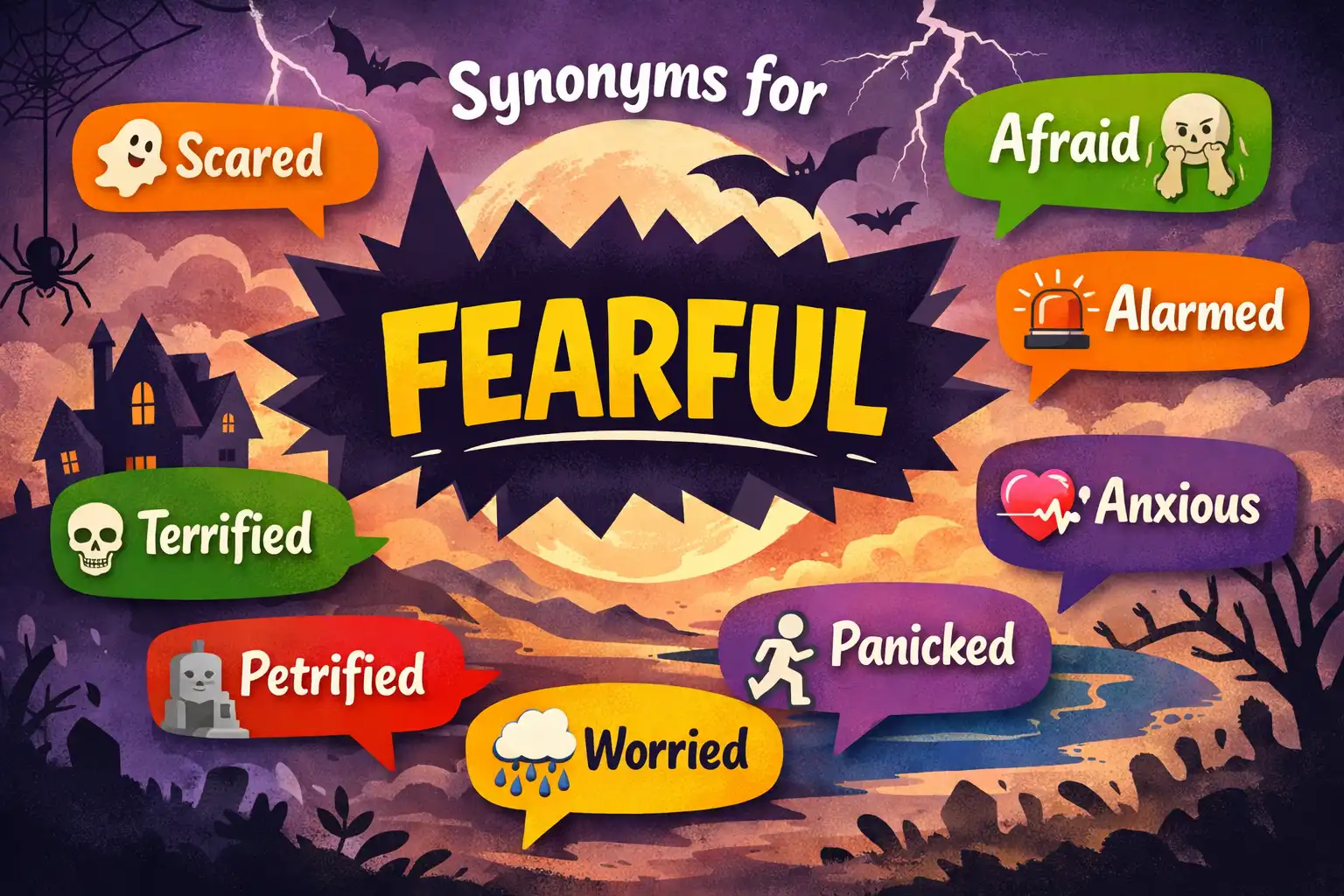
Finding the right synonyms for fearful can completely change how you write and speak. When you use different synonyms for fearful, your sentences become much more exciting to read. Learning these synonyms for fearful helps you avoid repeating the same word over and over again.
Imagine you are walking down a dark, quiet street late at night. You hear sudden, heavy footsteps echoing right behind you. Your heart beats fast, and your palms feel sweaty. A simple writer might tell the reader that you felt “scared” or “afraid.” But a master storyteller makes the scene come alive. They write that you felt petrified, tremulous, or rattled. This simple change in words makes the reader feel the suspense. That is why having a diverse vocabulary makes a massive difference in how we share ideas.
To make things very simple, to be fearful just means that a person, animal, or group feels scared, worried, or nervous about something bad that might happen. It is the feeling of wanting to hide or run away instead of feeling safe and strong.
- For students: Using diverse words helps you get better grades on essays and creative stories.
- For bloggers: Fresh words keep your readers interested so they stay on your page longer.
- For content writers: Changing your words helps you sound like a true expert and improves your SEO.
- For daily English users: It helps you share your feelings and ideas more clearly with your friends.
“The only thing we have to fear is fear itself.” — Franklin D. Roosevelt
“Fear makes us feel human, but courage makes us heroes.” — Anonymous
Connotative Meaning of Fearful
The word fearful carries a very strong, emotional connotation of worry, weakness, and danger. It makes people think of cold sweat, hiding, and waiting for something bad to happen. In contrast, it stands directly against courage, power, or staying completely calm. When someone is “fearful,” they are feeling unsafe, tense, and focused on escape.
Etymology of Fearful
- Origin: Old English
- Root Word: fær (meaning “sudden danger,” “calamity,” or “attack”)
- Suffix: -full (meaning “characterized by” or “full of”)
- Middle English: feerful (introduced around the 12th century)
- Modern English: Fearful (used to describe feeling fear, anxiety, or worry)
Linguistic Profile of Fearful
- US Pronunciation (IPA): /ˈfɪr.fəl/
- UK Pronunciation (IPA): /ˈfɪə.fəl/
- Syllables: 2 syllables (fear-ful)
- Affixation Pattern: Root word fear (noun/verb) + Suffix -ful (used to turn a noun into an adjective showing a state or quality).
another word for fearful
Using another word for fearful is a smart way to make your sentences sound fresh. When you find another word for fearful, you can match the exact feeling of your sentence. This keeps your writing from sounding like a robot wrote it.
- Helps you find the exact match for your context.
- Improves the rhythm of your sentences.
- Prevents word repetition throughout long articles.
words meaning fearful
There are many words meaning fearful that describe specific physical shaking or deep mental worry. When you search for words meaning fearful, you often find options that show panic or quiet shyness. Choosing the right one makes your ideas clear to the reader immediately.
- Allows you to show instead of just tell.
- Gives your readers a clear mental picture.
- Adds emotional weight to simple descriptions of fear.
fearful vocabulary
Building a strong fearful vocabulary is like adding new tools to your writing toolbox. An active fearful vocabulary allows you to switch between casual talk and professional writing easily. It ensures you always have the perfect word ready.
- Boosts your creative writing authority.
- Engages readers across different stories and articles.
- Saves time during the editing process.
Comparison of Key Concepts
| Keyword | Meaning | Usage Type | Context |
|---|---|---|---|
| another word for fearful | An alternative term to prevent word repetition. | Casual / Creative | General writing and editing |
| words meaning fearful | Terms that define physical or mental anxiety. | Emotional / Descriptive | Storytelling and vivid essays |
| fearful vocabulary | A collection of terms related to dread and panic. | Professional / Academic | Psychology, teaching, and study |
50 Dynamic Synonyms for Fearful
An ounce of courage is worth a ton of worry, so let us look at fifty incredible ways to say this word.
1. Afraid
- US IPA: /əˈfreɪd/
- UK IPA: /əˈfreɪd/
- Meaning: You feel fear or worry that something bad will happen.
- Examples:
- The little boy was afraid of the dark room.
- Do not be afraid to ask for help when you need it.
2. Scared
- US IPA: /skɛrd/
- UK IPA: /skeəd/
- Meaning: You feel fear because of sudden danger or noise.
- Examples:
- The loud thunder made the cat feel scared.
- He looked scared when the dog barked.
3. Frightened
- US IPA: /ˈfraɪ.tənd/
- UK IPA: /ˈfraɪ.tənd/
- Meaning: You are suddenly made afraid by something unexpected.
- Examples:
- The sudden noise frightened the baby.
- She felt frightened during the wild storm.
4. Terrified
- US IPA: /ˈtɛr.ə.faɪd/
- UK IPA: /ˈter.ə.faɪd/
- Meaning: You feel an extreme amount of fear.
- Examples:
- He is terrified of flying in airplanes.
- The hikers were terrified of the black bear.
5. Apprehensive
- US IPA: /ˌæp.rɪˈhɛn.sɪv/
- UK IPA: /ˌæp.rɪˈhen.sɪv/
- Meaning: You feel worried that something bad might happen in the future.
- Examples:
- She felt apprehensive before her big exam.
- They are apprehensive about moving to a new city.
6. Anxious
- US IPA: /ˈæŋk.ʃəs/
- UK IPA: /ˈæŋk.ʃəs/
- Meaning: You feel uneasy, worried, or nervous about what is coming next.
- Examples:
- He is anxious about his job interview today.
- Waiting for the doctor made her feel anxious.
7. Nervous
- US IPA: /ˈnɝː.vəs/
- UK IPA: /ˈnɜː.vəs/
- Meaning: You feel slightly worried, tense, or uneasy.
- Examples:
- The young actor was nervous before going on stage.
- I always get nervous when I speak in public.
8. Timid
- US IPA: /ˈtɪm.ɪd/
- UK IPA: /ˈtɪm.ɪd/
- Meaning: You are shy, quiet, and easily scared by others.
- Examples:
- The timid deer ran back into the deep woods.
- He gave a timid knock on the heavy wooden door.
9. Timorous
- US IPA: /ˈtɪm.ər.əs/
- UK IPA: /ˈtɪm.ər.əs/
- Meaning: You feel or show a lack of confidence and are easily frightened.
- Examples:
- She spoke in a timorous voice during the trial.
- The timorous rabbit hid under the green bush.
10. Petrified
- US IPA: /ˈpɛt.rə.faɪd/
- UK IPA: /ˈpet.rə.faɪd/
- Meaning: You are so scared that you cannot move or think.
- Examples:
- She was petrified when she saw the ghost costume.
- He stood petrified as the snake crawled past his foot.
11. Alarmed
- US IPA: /əˈlɑːrmd/
- UK IPA: /əˈlɑːmd/
- Meaning: You feel sudden worry or fear that danger is near.
- Examples:
- We were alarmed by the loud smoke detector.
- The sudden change in plans made her feel alarmed.
12. Panicky
- US IPA: /ˈpæn.ɪ.ki/
- UK IPA: /ˈpæn.ɪ.ki/
- Meaning: You are filled with sudden, wild fear that makes you act without thinking.
- Examples:
- The crowd became panicky when the lights went out.
- Do not get panicky if you get lost.
13. Uneasy
- US IPA: /ʌnˈiː.zi/
- UK IPA: /ʌnˈiː.zi/
- Meaning: You feel slightly worried, uncomfortable, or not at peace.
- Examples:
- He had an uneasy feeling about walking home alone.
- The quiet room made her feel uneasy.
14. Jittery
- US IPA: /ˈdʒɪt̬.ɚ.i/
- UK IPA: /ˈdʒɪt.ər.i/
- Meaning: You feel nervous, shaky, and unable to relax.
- Examples:
- Drinking too much coffee makes me feel jittery.
- The players looked jittery before the match started.
15. Edgy
- US IPA: /ˈɛdʒ.i/
- UK IPA: /ˈedʒ.i/
- Meaning: You are tense, nervous, and easily annoyed.
- Examples:
- She has been edgy all day while waiting for news.
- The dark weather made everyone feel a bit edgy.
16. Skittish
- US IPA: /ˈskɪt̬.ɪʃ/
- UK IPA: /ˈskɪt.ɪʃ/
- Meaning: You are easily excited, scared, or nervous.
- Examples:
- The young horse is very skittish around strangers.
- Investors are skittish about the unstable stock market.
17. Faint-hearted
- US IPA: /ˌfeɪntˈhɑːr.t̬ɪd/
- UK IPA: /ˌfeɪntˈhɑː.tɪd/
- Meaning: You lack courage and are easily scared by hard tasks.
- Examples:
- Climbing this steep mountain is not for the faint-hearted.
- He felt too faint-hearted to jump into the cold pool.
18. Cowardly
- US IPA: /ˈkaʊ.ɚd.li/
- UK IPA: /ˈkaʊ.əd.li/
- Meaning: You show a complete lack of bravery when facing danger.
- Examples:
- Running away and leaving your friend was a cowardly act.
- He apologized for his cowardly behavior during the fight.
19. Tremulous
- US IPA: /ˈtrɛm.jə.ləs/
- UK IPA: /ˈtrem.jʊ.ləs/
- Meaning: You are shaking or shivering slightly because you are scared or weak.
- Examples:
- She spoke with a tremulous voice at the meeting.
- He took a tremulous step onto the high rope bridge.
20. Spooked
- US IPA: /spuːkt/
- UK IPA: /spuːkt/
- Meaning: You are suddenly frightened or startled, especially like an animal.
- Examples:
- The loud car engine spooked the grazing cows.
- I got spooked when the wind slammed the door shut.
21. Intimidated
- US IPA: /ɪnˈtɪm.ə.deɪ.t̬ɪd/
- UK IPA: /ɪnˈtɪm.ɪ.deɪ.tɪd/
- Meaning: You feel frightened or nervous because someone else seems stronger.
- Examples:
- The new student felt intimidated by the big school.
- Do not feel intimidated by his loud voice.
22. Daunted
- US IPA: /ˈdɔːn.t̬ɪd/
- UK IPA: /ˈdɔːn.tɪd/
- Meaning: You feel scared or discouraged by a very big or hard task.
- Examples:
- She was not daunted by the long list of homework.
- The steep hill daunted the young bike riders.
23. Rattled
- US IPA: /ˈræt̬.əld/
- UK IPA: /ˈræt.əld/
- Meaning: You are made nervous, confused, or upset by something unexpected.
- Examples:
- The loud crash outside rattled the teacher.
- He got rattled during the hard job interview.
24. Shaken
- US IPA: /ˈʃeɪ.kən/
- UK IPA: /ˈʃeɪ.kən/
- Meaning: You feel deeply shocked, upset, or scared by an event.
- Examples:
- She was shaken after the minor car accident.
- The bad news left the whole family feeling shaken.
“Fear is only as deep as the mind allows.” — Japanese Proverb
25. Horrified
- US IPA: /ˈhɔːr.ə.faɪd/
- UK IPA: /ˈhɒr.ɪ.faɪd/
- Meaning: You feel a strong mix of shock, fear, and disgust.
- Examples:
- We were horrified by the messy state of the kitchen.
- He looked horrified when he dropped the expensive vase.
26. Worried
- US IPA: /ˈwɝː.id/
- UK IPA: /ˈwʌr.id/
- Meaning: You think about bad things that might happen and feel unhappy.
- Examples:
- My mom gets worried when I come home late.
- She is worried about her sick pet cat.
27. Cautious
- US IPA: /ˈkɔː.ʃəs/
- UK IPA: /ˈkɔː.ʃəs/
- Meaning: You act with great care to avoid danger or mistakes.
- Examples:
- Be cautious when you cross the busy street.
- The cautious cat slowly sniffed the new toy.
28. Concerned
- US IPA: /kənˈsɝːnd/
- UK IPA: /kənˈsɜːnd/
- Meaning: You feel worried or anxious about a specific person or situation.
- Examples:
- The doctor was concerned about his high fever.
- We are concerned about the dirty water in the lake.
29. Quaking
- US IPA: /ˈkweɪ.kɪŋ/
- UK IPA: /ˈkweɪ.kɪŋ/
- Meaning: You are shaking hard because of extreme cold, fear, or anger.
- Examples:
- He stood quaking in his boots before his speech.
- The quaking child hid behind his mother.
30. Trembling
- US IPA: /ˈtrɛm.blɪŋ/
- UK IPA: /ˈtrem.blɪŋ/
- Meaning: Your body is shaking slightly and quickly because you feel scared.
- Examples:
- Her hands were trembling as she opened the letter.
- The trembling puppy wanted to get out of the rain.
31. Shivery
- US IPA: /ˈʃɪv.ɚ.i/
- UK IPA: /ˈʃɪv.ər.i/
- Meaning: You feel cold and shake slightly because of fear or illness.
- Examples:
- The scary movie gave her a shivery feeling.
- He felt shivery as he walked out into the snow.
32. Startled
- US IPA: /ˈstɑːr.təld/
- UK IPA: /ˈstɑː.təld/
- Meaning: You are suddenly surprised or slightly frightened by a quick event.
- Examples:
- The sudden ring of the phone startled the sleeping cat.
- She gave a startled cry when I jumped out.
33. Agitated
- US IPA: /ˈædʒ.ə.teɪ.t̬ɪd/
- UK IPA: /ˈædʒ.ɪ.teɪ.tɪd/
- Meaning: You feel very worried, excited, or upset and cannot stay calm.
- Examples:
- The angry dog became more agitated as we walked closer.
- She was agitated because she lost her keys.
34. Distressed
- US IPA: /dɪˈstrɛst/
- UK IPA: /dɪˈstrest/
- Meaning: You feel great pain, sadness, worry, or physical suffering.
- Examples:
- The distressed bird could not fly out of the room.
- He was distressed by the sad news on TV.
35. Frozen
- US IPA: /ˈfroʊ.zən/
- UK IPA: /ˈfrəʊ.zən/
- Meaning: You are unable to move because of extreme fear or shock.
- Examples:
- She was frozen with fear when she saw the big spider.
- He stood frozen as the car drove past him fast.
36. Craven
- US IPA: /ˈkreɪ.vən/
- UK IPA: /ˈkreɪ.vən/
- Meaning: You are extremely cowardly and completely lack courage.
- Examples:
- The king made a craven decision to run away.
- He was punished for his craven actions during the emergency.
37. Pusillanimous
- US IPA: /ˌpjuː.sɪˈlæn.ə.məs/
- UK IPA: /ˌpjuː.sɪˈlæn.ɪ.məs/
- Meaning: You are very timid and lack the courage to make hard choices.
- Examples:
- The leader was too pusillanimous to stand up for his team.
- He made a pusillanimous excuse to avoid the difficult work.
38. Yellow-bellied
- US IPA: /ˈjɛl.oʊˌbɛl.id/
- UK IPA: /ˈjel.əʊˌbel.id/
- Meaning: You are cowardly and afraid to do things that need courage.
- Examples:
- No one likes a yellow-bellied teammate who quits early.
- He called his brother yellow-bellied for not riding the roller coaster.
39. Chicken-hearted
- US IPA: /ˈtʃɪk.ɪnˌhɑːr.t̬ɪd/
- UK IPA: /ˈtʃɪk.ɪnˌhɑː.tɪd/
- Meaning: You are easily scared and do not have much bravery.
- Examples:
- The chicken-hearted boy refused to enter the dark cave.
- Do not be so chicken-hearted about going to the dentist.
40. Paranoid
- US IPA: /ˈpær.ə.nɔɪd/
- UK IPA: /ˈpær.ə.nɔɪd/
- Meaning: You are overly suspicious and fear that people want to hurt you.
- Examples:
- He feels paranoid that everyone is talking about him.
- The quiet noises in the dark made her paranoid.
41. Restless
- US IPA: /ˈrɛst.ləs/
- UK IPA: /ˈrest.ləs/
- Meaning: You are unable to stay still or relax because of worry or boredom.
- Examples:
- The restless crowd waited impatiently for the show.
- He spent a restless night tossing and turning.
42. Threatened
- US IPA: /ˈθrɛt.ənd/
- UK IPA: /ˈθret.ənd/
- Meaning: You feel that someone or something is going to hurt or harm you.
- Examples:
- The wild bird felt threatened when we came too close.
- He felt threatened by the competitor’s high sales numbers.
43. Vulnerable
- US IPA: /ˈvʌl.nɚ.ə.bəl/
- UK IPA: /ˈvʌl.nər.ə.bəl/
- Meaning: You are weak and easily hurt, either physically or emotionally.
- Examples:
- Without a coat, she felt vulnerable to the cold wind.
- Small babies are very vulnerable to sickness.
44. Suspicious
- US IPA: /səˈspɪʃ.əs/
- UK IPA: /səˈspɪʃ.əs/
- Meaning: You feel that you cannot trust someone or that something is wrong.
- Examples:
- The guard was suspicious of the man near the door.
- She gave him a suspicious look when he lied.
45. Hesitant
- US IPA: /ˈhɛz.ə.tənt/
- UK IPA: /ˈhez.ɪ.tənt/
- Meaning: You are slow to speak or act because you feel unsure or nervous.
- Examples:
- He was hesitant to jump off the high diving board.
- She gave a hesitant smile to the new neighbors.
46. Cowed
- US IPA: /kaʊd/
- UK IPA: /kaʊd/
- Meaning: You are made fearful and submissive by threats or show of force.
- Examples:
- The young soldiers were cowed by the angry general.
- She refused to be cowed by the school bullies.
47. Defensive
- US IPA: /dɪˈfɛn.sɪv/
- UK IPA: /dɪˈfen.sɪv/
- Meaning: You act quickly to protect yourself from attacks.
- Examples:
- The small cat got defensive when the dog approached.
- He became defensive when they asked about his mistakes.
48. Overawed
- US IPA: /ˌoʊ.vɚˈɔːd/
- UK IPA: /ˌəʊ.vəˈɔːd/
- Meaning: You feel so much respect or fear for someone that you are silent.
- Examples:
- The young players were overawed by the famous stadium.
- She was overawed when she met the queen.
49. Wide-eyed
- US IPA: /ˌwaɪdˈaɪd/
- UK IPA: /ˌwaɪdˈaɪd/
- Meaning: Your eyes are opened very wide because you are surprised or scared.
- Examples:
- The wide-eyed children watched the scary magic show.
- He stood wide-eyed when the alarm started to ring.
50. Horror-struck
- US IPA: /ˈhɔːr.ɚ.strʌk/
- UK IPA: /ˈhɒr.ə.strʌk/
- Meaning: You are filled with a sudden and very deep feeling of horror.
- Examples:
- The crowd was horror-struck as the acrobat fell.
- She stood horror-struck when she saw the fire.
Antonyms of Fearful
If you want to describe the opposite of fearful, use these terms:
- Fearless: Showing no fear at all; incredibly brave and bold.
- Courageous: Having the mental strength to face danger or pain without running.
- Bold: Brave, strong, and highly confident in front of scary situations.
- Confident: Feeling completely sure of your own abilities, safety, and choices.
- Valiant: Possessing or showing courage or determination when facing dread.
Prototype Meaning and Categorization of Fearful
In cognitive linguistics, the prototype of fearful is a deep physical and mental response of worry triggered by a direct threat to safety (such as facing a wild animal or a loud crash).
- Core Category: Emotional distress (dynamic, defensive, and survival-based).
- Secondary Category: Social or abstract worry (such as failing an exam or feeling shy).
- Syntactic Category: Adjective (describing a state of being).
FAQ (Frequently Asked Questions)
1. What is the most common synonym for fearful in writing?
The most common synonyms are “afraid” and “scared.” “Afraid” is used for regular everyday worries, while “scared” is often used for quick physical shocks.
2. Is there a difference between “fearful” and “frightened”?
Yes. “Fearful” is a lasting state of worry or expectation of danger. “Frightened” usually refers to a sudden shock caused by an unexpected event, like a loud noise.
3. What is a professional synonym for fearful?
In a professional or business environment, words like “apprehensive,” “concerned,” or “cautious” sound much more polished and formal.
4. Why should content writers use different synonyms for fearful?
Content writers should use these synonyms to build emotional tension and avoid repeating the same basic words. This improves reader engagement and helps your articles rank much higher on search engines.
5. Can “fearful” mean something very large?
Yes, in older English, “fearful” was sometimes used to mean “causing fear” or “very great,” such as a “fearful storm.” Today, it almost always means feeling fear.
Conclusion
Learning different synonyms for fearful is a fast and simple way to transform your writing, blogging, speaking, and overall communication skills. When you stop using the same words repeatedly, your sentences become vibrant and clear. Using words like “apprehensive,” “petrified,” or “skittish” keeps your audience fully engaged, whether you are writing a school paper, a horror story, or a professional email.
Try to practice these new words in your daily emails, essays, and conversations. The more you use them, the more natural they will feel to you. Start small by replacing “scared” with “cautious” or “rattled” today, and watch your voice grow stronger and more professional!
“He who has overcome his fears will truly be free.” — Aristotle
“Limits, like fears, are often just an illusion.” — Michael Jordan

Andrew Powell is a travel writer and nature journalist who has spent over a decade writing about places, landscapes, and the natural world — and thinking carefully about the words that do those subjects justice ( Biography ).