Quick Intro
The word fearful is common in daily conversation, writing, and storytelling. It describes someone who feels afraid or worried about danger. Learning synonyms for fearful helps you speak and write more clearly. It also helps ESL learners choose the best word for different situations.
Direct Answer
Meaning of Fearful
Fearful means feeling afraid, worried, or nervous about possible danger or harm.
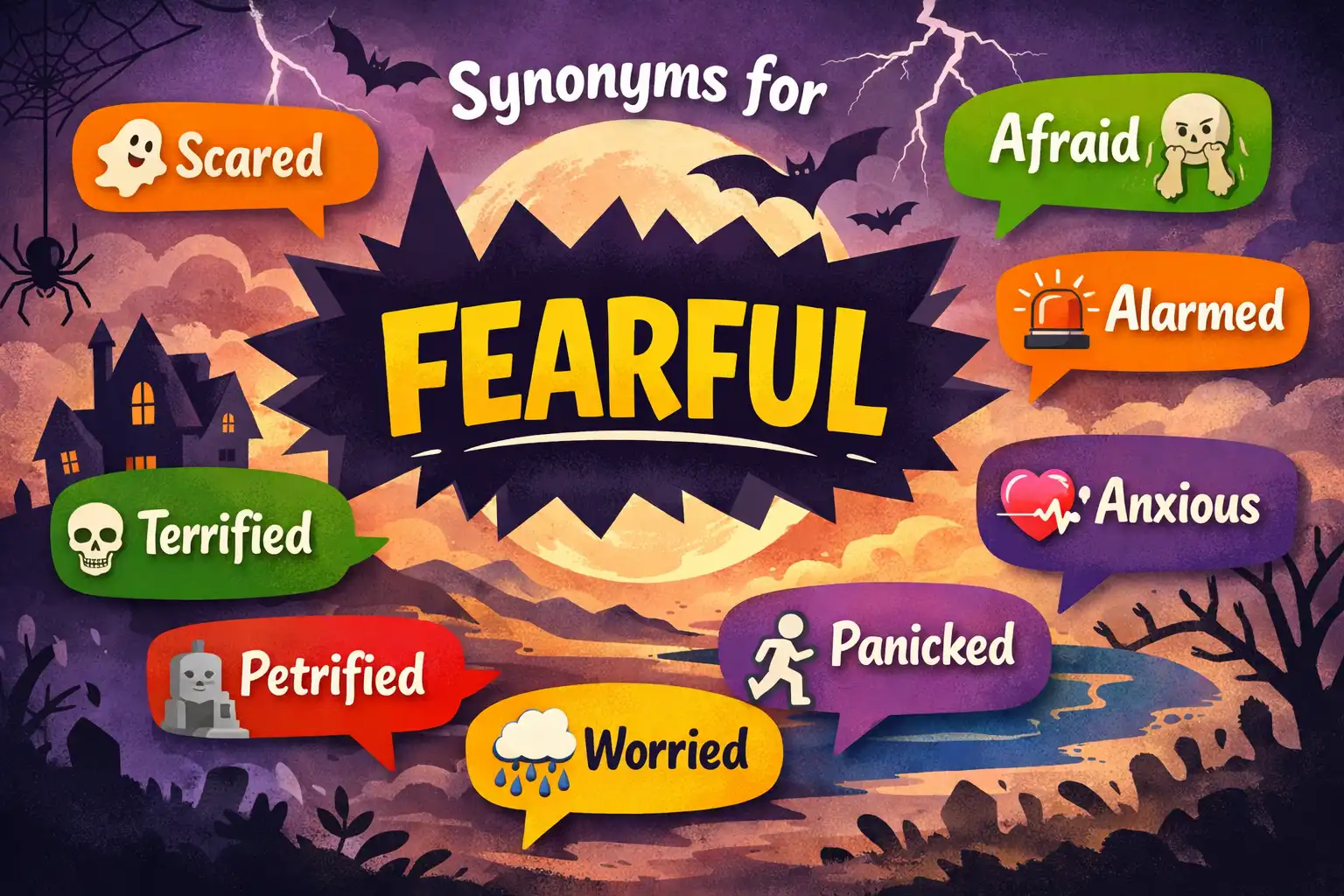
Common synonyms include:
- afraid
- scared
- frightened
- nervous
- anxious
- worried
- terrified
- alarmed
- uneasy
- apprehensive
Categories of Synonyms
Physical Discomfort
These words describe fear that shows physical reactions such as shaking, sweating, or a fast heartbeat. Words like terrified or scared often show strong physical fear.
Emotional Discomfort
These synonyms describe internal feelings of worry or anxiety. Words such as anxious and apprehensive focus on emotional tension rather than immediate danger.
Social Discomfort
Some synonyms describe fear in social situations or uncertain environments. Words like nervous or uneasy often appear when someone feels uncomfortable around others or new situations.
Synonyms Table
| Word | Simple Meaning | Example Sentence |
| Afraid | Feeling fear or worry | She felt afraid walking alone at night. |
| Scared | Feeling sudden fear | The loud noise scared the child. |
| Frightened | Feeling strong fear | The dog looked frightened during the storm. |
| Nervous | Feeling worried or tense | He felt nervous before the interview. |
| Anxious | Feeling worried about the future | She was anxious about the exam results. |
| Worried | Thinking something bad may happen | They were worried about the weather. |
| Terrified | Extremely afraid | The hikers were terrified during the earthquake. |
| Alarmed | Suddenly worried or shocked | The teacher was alarmed by the loud crash. |
| Uneasy | Slightly uncomfortable or worried | I felt uneasy in the dark hallway. |
| Apprehensive | Concerned about something coming | She was apprehensive about the meeting. |
Master Synonyms List (Grouped by Level)
Beginner / Simple
Afraid
Meaning: feeling fear or concern.
Example: She felt afraid to walk home alone at night.
Scared
Meaning: feeling sudden fear.
Example: The thunder made him scared.
Frightened
Meaning: feeling strong fear.
Example: The child looked frightened after hearing the noise.
Worried
Meaning: thinking something bad might happen.
Example: He was worried about the test results.
Intermediate
Nervous
Meaning: feeling tense or uneasy about something.
Example: She felt nervous before giving her presentation.
Anxious
Meaning: feeling worried about future events.
Example: The student was anxious about the final exam.
Uneasy
Meaning: feeling slightly uncomfortable or suspicious.
Example: I felt uneasy walking through the empty street.
Alarmed
Meaning: suddenly worried or frightened by danger.
Example: The residents were alarmed by the loud siren.
Advanced / Formal
Apprehensive (Formal)
Meaning: worried about something that may happen.
Example: She felt apprehensive before the important interview.
Terrified
Meaning: extremely frightened.
Example: The passengers were terrified during the turbulence.
Formal vs Informal Synonyms
Some synonyms for fearful work better in casual conversation, while others suit formal writing.
Informal words
These appear in everyday speech.
- scared
- afraid
- nervous
Example: I was scared when the lights suddenly went out.
Formal or academic words
- apprehensive
- anxious
- alarmed
Example: The investors were apprehensive about the market changes.
Choosing the right level of formality helps your writing sound natural.
Real-Life Usage Examples
Conversation
I felt nervous before meeting the new manager.
Academic Writing
Students may feel anxious when preparing for major examinations.
Business Writing
Investors were apprehensive about sudden market changes.
Blogging
Travelers often feel uneasy when exploring unfamiliar places.
Emotional Expression
She looked frightened when the storm suddenly began.
Similar Words Comparison
Fearful vs Afraid
Both describe fear, but afraid is more common in daily speech.
Example:
She was afraid of the dark.
Fearful may sound slightly more descriptive in writing.
Example:
The fearful child stayed close to his mother.
Fearful vs Anxious
Fearful usually relates to direct fear of danger.
Anxious often relates to worry about future events.
Example:
She felt anxious about the upcoming presentation.
Example Sentences
- The child looked fearful during the thunderstorm.
- She felt afraid to enter the dark building.
- The loud noise scared everyone in the room.
- He appeared frightened when the dog barked.
- Many students feel nervous before exams.
- She felt anxious while waiting for the results.
- The passengers were terrified during the turbulence.
- The residents were alarmed by the sudden fire alarm.
- I felt uneasy walking through the empty hallway.
- The employee looked apprehensive about the meeting.
- The hikers felt worried about the approaching storm.
- The young boy seemed scared of the loud thunder.
- The audience grew nervous before the announcement.
- She became anxious about the job interview.
- The travelers were uneasy in the unfamiliar city.
Common Mistakes
1. Using extremely strong words unnecessarily
Words like terrified describe very strong fear. Using them for small worries can sound unnatural.
2. Mixing emotional and physical fear incorrectly
For example, anxious usually describes worry, not sudden danger.
3. Repeating the same synonym
Using afraid too often can make writing repetitive. Vary your vocabulary.
4. Choosing overly formal words in casual speech
Words like apprehensive may sound unnatural in everyday conversation.
Tips / Best Practices
Choose synonyms based on:
Tone
Formal writing may require words like apprehensive.
Context
Physical danger may require stronger words like terrified.
Formality
Casual conversation usually uses afraid or scared.
Clarity
Pick the word that best explains the situation.
Avoid repeating the same word too often. Using different synonyms improves readability and keeps writing interesting.
When NOT to Use Fearful
Do not use fearful when describing mild worry or curiosity. Words like concerned or uncertain may fit better.
Example of incorrect use:
She was fearful about choosing a restaurant.
Better option:
She was unsure about choosing a restaurant.
Opposite Words (Antonyms)
Common antonyms include:
- brave
- confident
- fearless
- calm
- courageous
Example:
The brave firefighter entered the burning building.
FAQs
What does fearful mean?
Fearful means feeling afraid or worried about possible danger.
Is fearful formal or informal?
Fearful is neutral and can be used in both casual and formal writing.
How can I use fearful in conversation?
You can say: “The child looked fearful during the storm.”
What is the best synonym for fearful?
Common options include afraid, scared, anxious, and frightened.
Can fearful be replaced with afraid?
Yes. Afraid is one of the most common and natural replacements.
Is terrified stronger than fearful?
Yes. Terrified describes extreme fear, stronger than fearful.
Is anxious always related to fear?
Not always. Anxious often means worried about the future rather than immediate danger.
Is nervous a synonym for fearful?
Sometimes. Nervous describes tension or worry rather than direct fear.
Can fearful describe personality?
Yes. It can describe someone who often feels afraid or cautious.
Is fearful common in writing?
Yes. It appears in stories, news articles, and descriptive writing.
Conclusion
Learning synonyms for fearful helps improve both speaking and writing skills. Using the right synonym allows you to express emotions more accurately and clearly.
Expanding vocabulary also makes communication easier for ESL learners and writers. Try using three new synonyms from this list in your next sentence to practice.

Andrew Powell is a research-focused editorial writer specializing in word meanings, semantic distinctions, and language accuracy. With a professional background in research-based informational writing, he has built his work around careful analysis of how words function in context and how subtle variations in meaning influence communication.
Andrew’s expertise lies in word comparison and semantic precision. His work examines closely related terms, clarifies usage differences, and explains how context shapes interpretation. Rather than offering surface-level definitions, he approaches language with a structured methodology—reviewing usage patterns, consulting authoritative dictionaries, analyzing corpus data, and evaluating real-world examples. This research-driven process ensures that readers receive clear, reliable explanations grounded in linguistic evidence.
A core focus of his writing is helping readers understand meaning differences that are often overlooked. Whether distinguishing between near-synonyms, exploring formal versus informal usage, or clarifying nuanced grammatical structures, Andrew aims to remove ambiguity. His explanations are designed to support students, writers, educators, and professionals who rely on precise language in academic, business, or creative contexts.
Andrew contributes to the Word Synonyms niche with an emphasis on clarity, neutrality, and factual accuracy. He prioritizes language accuracy over simplification and avoids unsupported claims. Each piece is structured to answer specific user queries while maintaining contextual depth, aligning with current search quality standards and semantic SEO principles.
By combining research-based writing with careful editorial standards, Andrew Powell helps readers develop stronger vocabulary awareness and make informed word choices. His work reflects a commitment to trustworthy information, thoughtful analysis, and practical value for anyone seeking a deeper understanding of English semantics.